Career Growth Toolkit episode 1: Own Your Growth
“Your career is yours and yours only, but you can’t do it alone, and you need a plan.”
Most companies say they support career growth. But if you ask 10 employees what’s expected of them to get promoted or take on more responsibility, chances are you’ll get 10 different answers, or a lot of shrugs.
Whether you’re an employee trying to grow, or a leader trying to support your team’s development, you’ve probably run into at least one of these:
- You’re not sure what level you’re operating at, or how it compares to the next one.
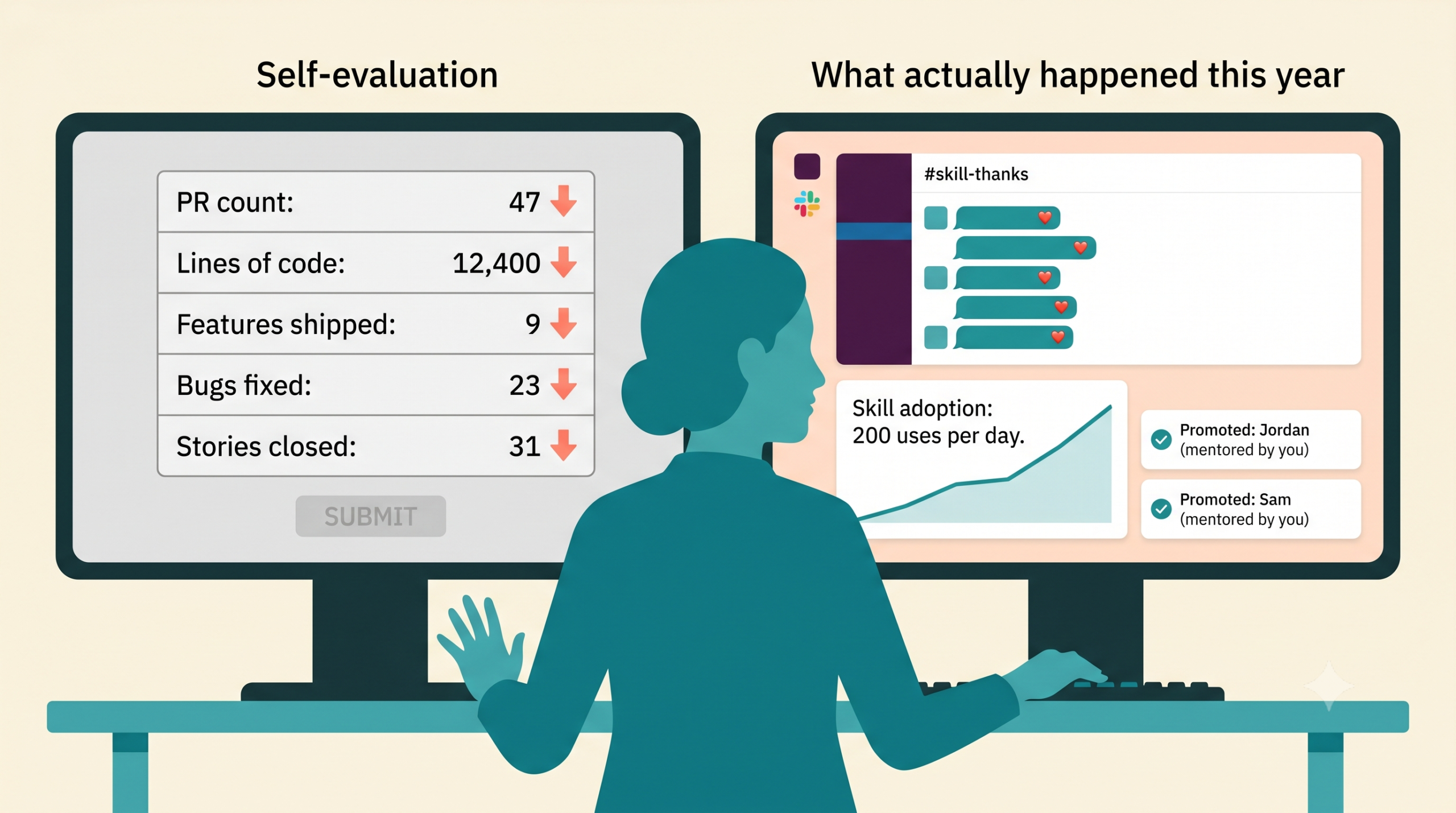
- You’ve been doing more, but it’s not always visible or acknowledged.
- Feedback feels sporadic, sugar-coated, or hard to act on.
- Promotions happen in opaque ways, or only during annual reviews.
Here’s the fix: don’t wait for someone else to figure it out.
Build your own Live Promotion Package: a tool to document, reflect, and drive your own growth.
What Is a Live Promotion Package?
A Live Promotion Package is not a formal HR document.
It’s a living, breathing self-assessment that helps you:
- Understand where you are now.
- Show where you’re already operating at the next level.
- Know exactly what to improve to get there consistently.
- Make the case for growth and bring your manager along with you.
“Promotions aren’t prizes. They’re milestones. You shouldn’t wait for your manager to guess you’re ready.”
It’s also a leadership tool: if you’re a manager, use this package to support your reports.
You’ll build transparency, fairness, and a stronger growth culture.
What’s Inside the Package?
Here’s a breakdown you can use: structure your live package around these sections. Want a ready-to-use template? Send a note, I’ll send you a link.
SECTION I: Reasons to Promote
- Why you’re ready for the next level
- Evidence of operating consistently at that level for at least 6 months
- Key contributions and impact
Example: “Led the transition from system X to system Y, reducing downtime by 40%. Also mentored two junior engineers who have since taken on increased ownership.”
Use visuals:
Example:Visual of a timeline comparing the impact (on uptime, or on productivity of the mentees. Show before and after, like: “Current Level” → “Next Level” → “Operating Level” (with 6-month highlight)
SECTION II: Reasons Not to Promote (Yet)
- Areas where you needed / still need development
- Honest reflection = faster progress
- Remove “anchors”
Examples: “Need team lead support to close deals and deepen value-prop definition.” “Not autonomous on long-term scalability issue prevention.” “Still building fluency in cross-functional communication; needed PM help to resolve recent conflict with engineering team.”
This isn’t about disqualifying yourself: it’s about focusing your plan.
Tip: don’t hide these, it’s important to show what you’re working on and how you improve. Leave this section and all the items in the document, strikethrough the ones that you overcame.
SECTION III: Skills Matrix Review
- Compare yourself to the current level and next level skill and competency expectations
- What are you meeting, exceeding, or falling short on?
- What’s blocking the promotion?
“At senior level, ‘strategic thinking’ means seeing 2+ quarters ahead. Currently strong at weekly planning, but need to zoom out more consistently.”
Use visuals:
Side-by-side table comparing “Current Role” vs “Next Role” skills. Use emoji or color coding for quick skimming (green/thumb up/star, yellow/warning sign, red/stop sign)
SECTION IV: Feedback
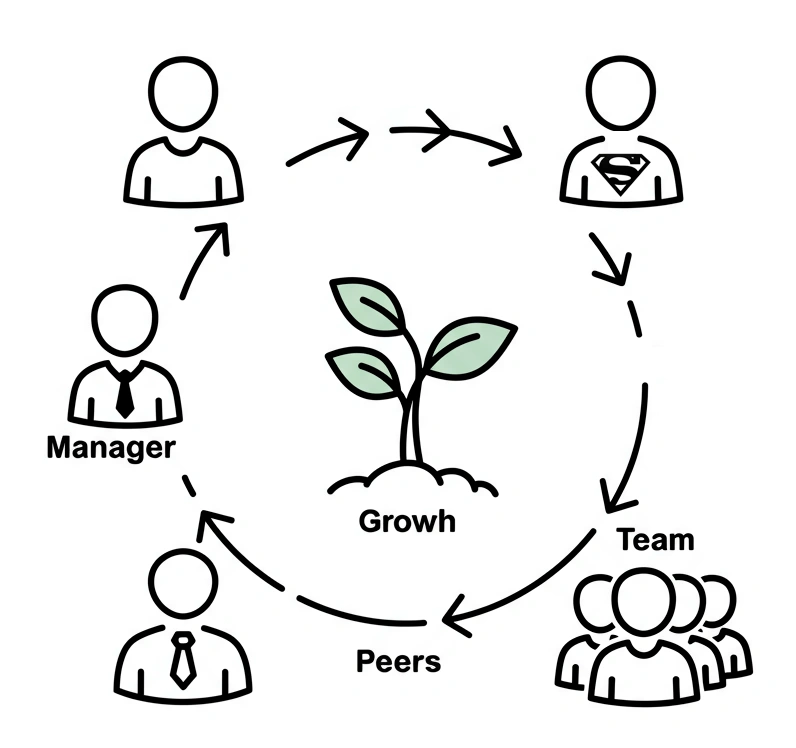
- Get feedback from peers, managers, and especially those already at the next level
- Ask questions like:
- “What do you observe on how I approach problems and solutions?”
- “What do you think I do better than most?”
- “Where do you think I need to improve to take on more?”
- Don’t wait for perfect timing. Ask regularly. Ask candidly: candor is kindness.
“One or two insights a week is better than a 100-point survey once a year.”
SECTION V: Employee Self-Assessment
- Highlight your own work and reflections
- Show how you’re growing through work
- Focus on impact and learning, not perfection
“Shifted from problem-solver to enabler. Delegated major launch components and supported junior PM in leading standups and cross-functional syncs.”
This is where you connect the dots between daily work and long-term development.
Make It a Habit, Not a Ceremony
Career growth isn’t linear. It’s messy. That’s why this package is live, not a once-a-year document.
- Revisit it every quarter
- Share it with your manager during 1:1s, and together strikethrough reasons not to promote
- Use it to guide career conversations and to ask for help
And if you’re a manager: make this part of your coaching rhythm. Help your reports build it over time, not just at review season.
Why This Works
- Makes growth visible and specific
- Helps employees feel ownership and clarity
- Gives managers real data to support development
- Prevents surprise “promotion denials” and builds trust
“Hold the light instead of fixing the engine.”
Use delegation, feedback, and reflection as growth moments.
How Branco Helps
At Branco, we built this idea into the product.
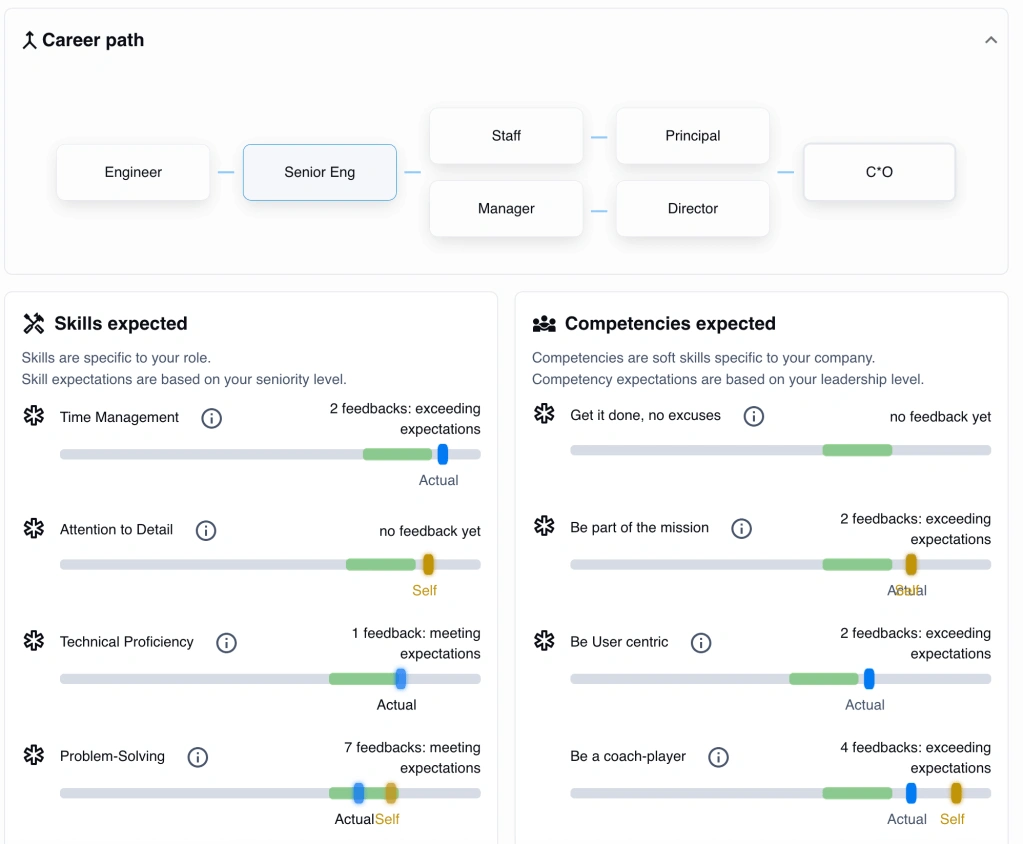
- Employees can track impact, skills, competencies and feedback continuously
- Career paths are clear, and you can interactively jump from role to role and see where you stand
- Compare your self reflections to your peers aggregate feedback
- Leaders and employees have a live promotion packages always available, with evidence and 360 feedback connections
- 360 feedback is lightweight, frequent, and customize on your team objective and company needs
- Career growth becomes an ongoing conversation: not an annual surprise
TL;DR – Start Now
If you’re an employee, start building your package today.
If you’re a manager, encourage your team to use this framework.
Copy the Live Promotion Package template now and take control of your growth, or ask your manager to join Branco.ai and get all the benefits without any of the paperwork 🙂
It’s not about chasing titles. It’s about knowing where you stand, growing with intention, and being ready when the opportunity comes.
Next up:
Episode 2 – “Know What Good Looks Like: Expectations Made Clear”
We’ll talk about making expectations visible through values, skills, and career paths.