Your HRIS can’t see half your team. Here’s what HR has to do before the market decides for you.

Monday morning. The VP of People at a 400-person Series C is reviewing Q3 headcount. Engineering filed eighteen requisitions. Finance approved twelve. She is prepared for the conversation about the gap. She is not prepared for the actual reason.
Six of the eighteen do not have a surname.
Six are AI agents. Already drafting code. Already shipping pull requests. Already on Slack with their own usernames. The work has started. The HRIS rejected them because the schema requires a legal name and a date of birth. The org chart she will send the CEO this afternoon is wrong by six headcount. She is the last person in the building to know.
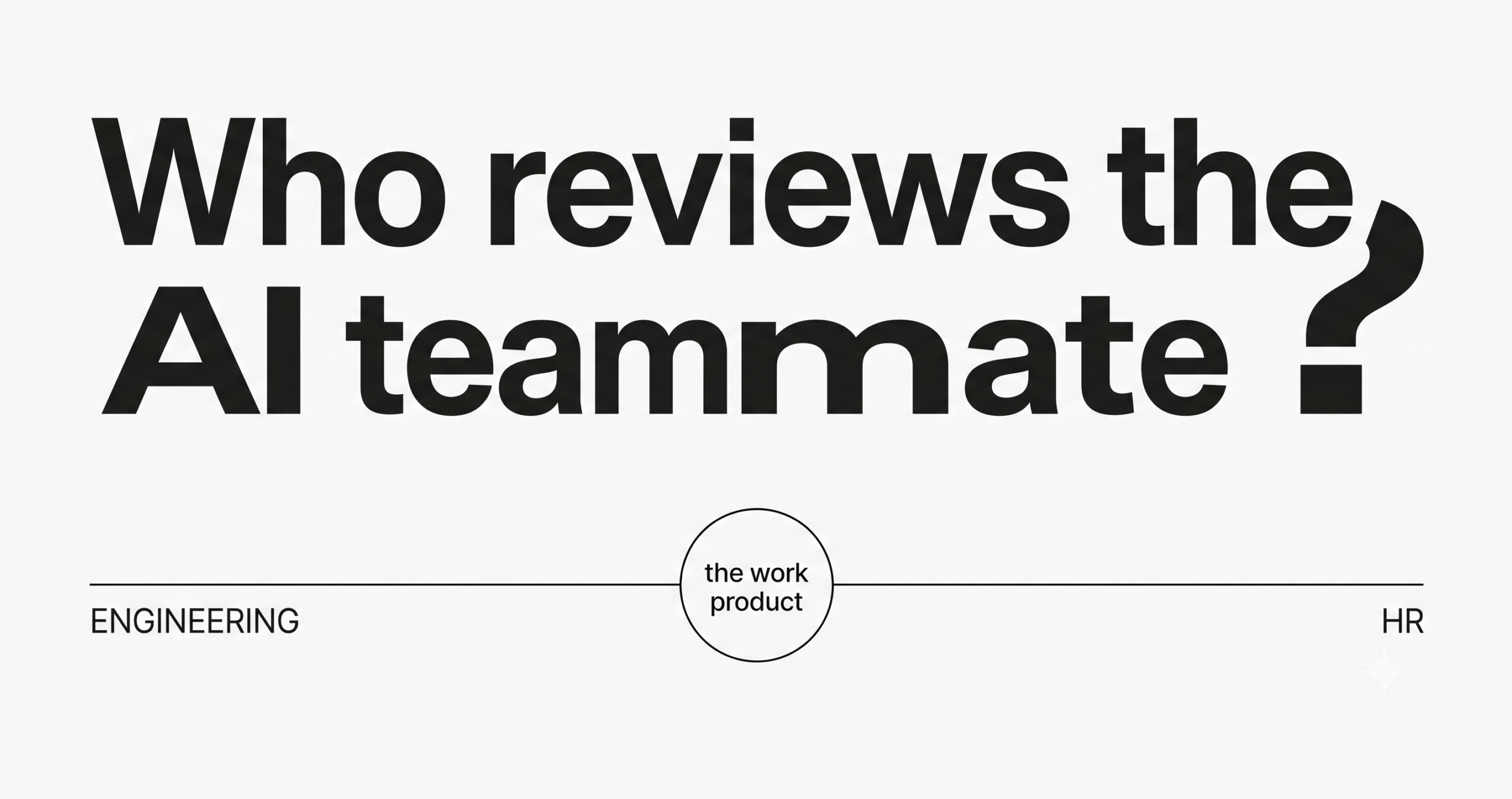
The H in HR no longer stands only for Human. And after sixty years of feeling slightly off, the Resources half has never been more accurate.
Agents Are Teammates, Not Tools
Kenta Naruse is a Senior ML Engineer at Rakuten. Last year he handed a 12.5-million-line code migration to Claude Code and let it run for seven hours. The output hit 99.9% numerical accuracy against the reference implementation (Anthropic, 2026).
His own line is the title of this section in one sentence.
“I didn’t write any code during those seven hours. I just provided occasional guidance.”
Read it twice. It is not a sentence about automation. It is a sentence about management. Naruse did what every good manager has done since the role was invented. He gave context. He set goals. He provided feedback. He kept the work aligned. He just did it with a teammate who happens not to be human.
Rakuten’s time to market on engineering work fell from twenty-four days to five. Naruse now runs an ambient agent that fans complex tasks into twenty-four parallel Claude Code sessions. One engineer. A team of twenty-four.

This is not an engineering story.
Austin Lau is the first growth hire at Anthropic. He had never opened a terminal before he took the job. For ten months he ran the entire growth marketing function by himself. Paid search. Paid social. App stores. Email. SEO. He built a fleet of agents with custom Skills for brand voice. A slash command for responsive search ads. A Figma plugin that generates a hundred ad variations from a single paste. Ad creation went from thirty minutes to thirty seconds (Anthropic, 2026).
His own framing of the change: marketing is “evolving toward something like product management, where marketers execute on campaigns and build products to help achieve their targets.”
One engineer in Tokyo. One marketer in San Francisco. Different functions. Different industries. Same archetype. The teammate without a surname is here, working, in every function of the modern company.
The System Breaks at the Surname
HR’s entire operating model sits on a single primary key. A named human being. Create an employee record in any major HRIS today. The schema will demand a first name, a last name, a date of birth, a tax identifier. These are not optional fields. They are the contract.
The fastest-growing part of the workforce does not satisfy that contract.

Workday saw the gap before most. In February 2025 they launched a separate product called the Agent System of Record. By their own description, it is a workforce management system for “digital employees.” A sidecar ledger, sitting alongside the Worker object, because the Worker object cannot hold an agent (Workday, 2025).
Their CEO Carl Eschenbach said it plainly.
“The workforce of the future will include both humans and AI agents, and businesses that don’t learn to manage this incredibly complex reality will quickly fall behind.”
The diagnosis is right. We respect it. The prescription is where we disagree.
A sidecar product means your HRIS still does not know who is on your team. The Super IC and her agent fleet are one team. They produce one outcome. They work against one set of goals. HR is reading two reports about them. Comp planning is reading two reports. The CEO is reading two reports. The team is one team.
The schema has to evolve. Not a sidecar. A foundation.
There is a sentence the CEO will repeat at the next board meeting if HR does not say it first.
“If our HR system can’t see half the workforce, what is it for?”
The choice is not whether the hybrid workforce exists. It already does, in your company, today, with or without your permission. The choice is whether HR architects it. Or whether HR is the function being routed around while the architecture gets built somewhere else.
Two Roles Get Promoted. Two Roles Get Erased.
Out of this fracture, two new tiers are emerging. Both are promotions for the people who make the jump.
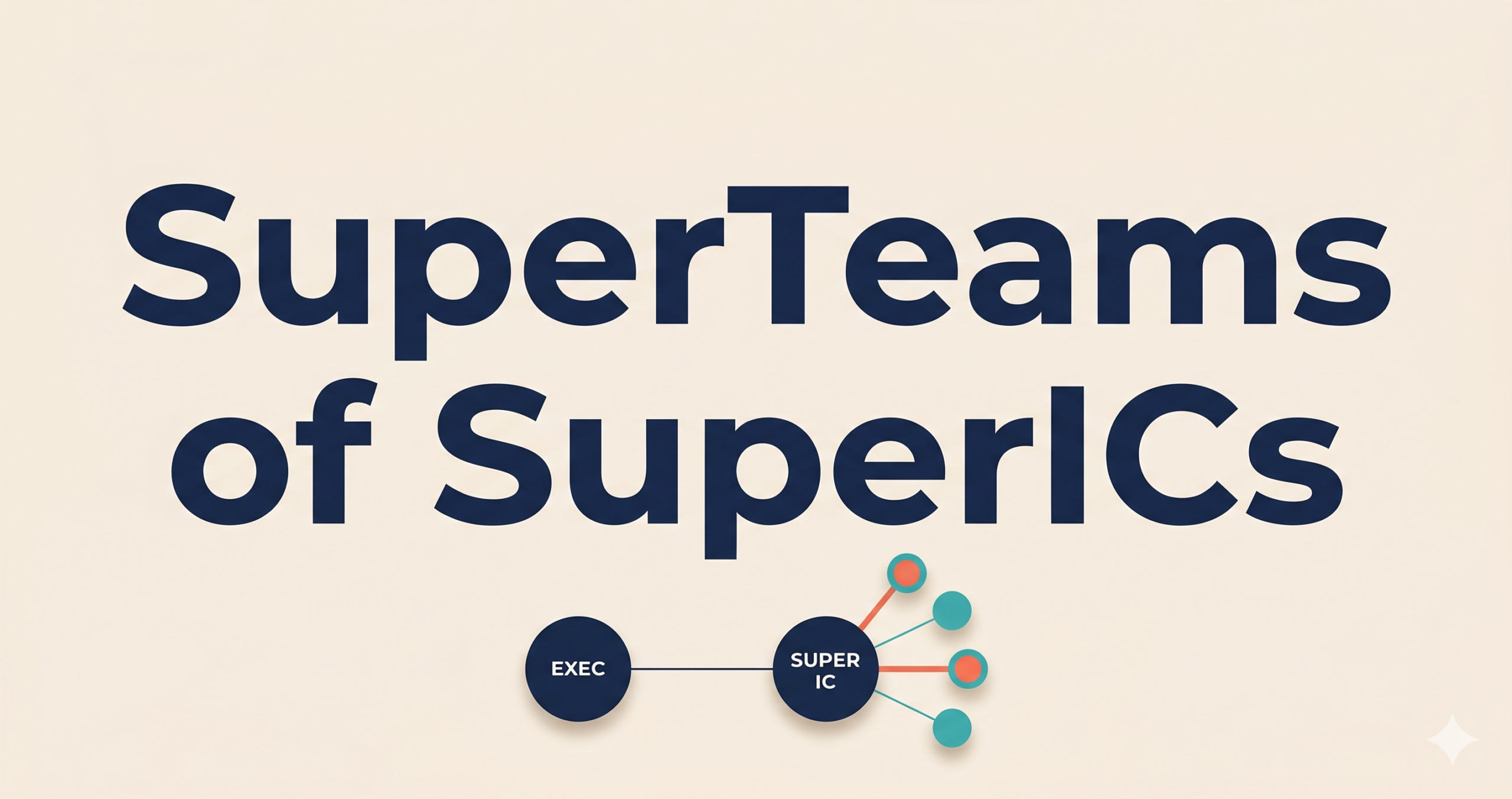
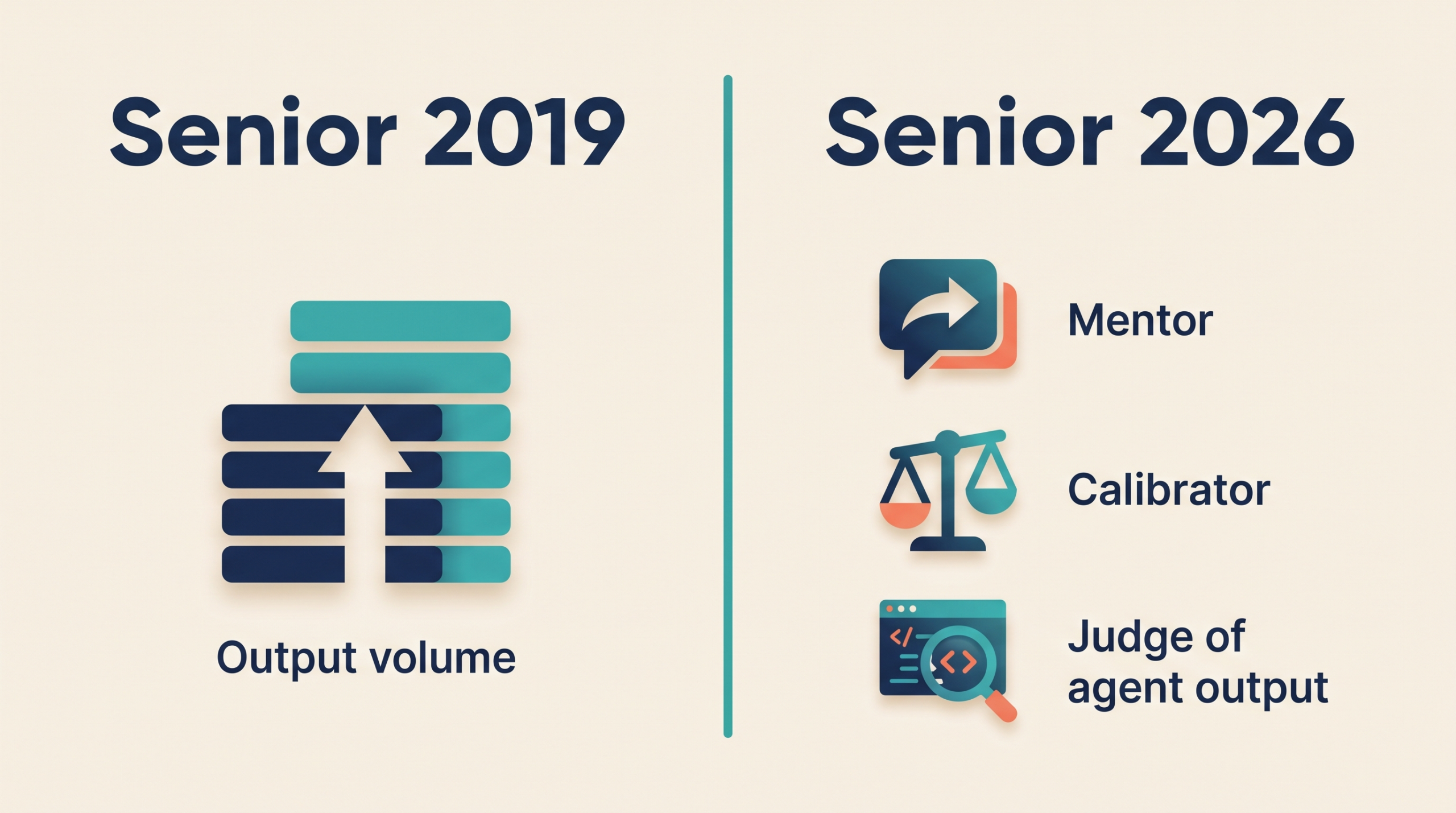
The Super IC. A senior individual whose contribution went 10x because their team is a fleet of agents. Naruse. Lau. The ladder grew a rung at the top. Josh Bersin has called this archetype the Superworker, and he is largely right (Bersin, 2026). We push back on one point. Worker is a story about output. IC is a story about the ladder. The ladder is what HR has to redesign. Career paths. Comp bands. Levelling rubrics. Succession plans. The Super IC is a structural role, not a productivity statistic.
The Supreme Director of Collaboration and Alignment. The manager who orchestrates a hybrid team where some teammates have surnames and some do not. HBR has started calling this person an Agent Manager (HBR, 2026). The frame is flat. Manager of agents makes it sound like a sub-role. It is not. The job of holding alignment across humans and agents is the new center of gravity in management. It is the most consequential seat in the company. Alignment, not headcount, is the bottleneck of getting anything done.

Two roles get promoted. Two roles get erased.
Erased: the IC who refuses to work with agents. Their work is already being done. Better. Faster. Cheaper. By the Super IC two desks away. They will not lose their job to AI. They will lose it to a colleague who learned to work with AI.
Erased: the people-only manager who cannot define context, goals, or feedback for a non-human teammate. Their team will shrink around them. Their span of control was always a proxy for the multiplier they could create. The multiplier now lives in alignment. Alignment requires being fluent across both registers.
In March 2026, Atlassian laid off 1,600 people, about ten percent of the company. In the same memo, they opened roughly 800 new requisitions in AI-native roles. Their CEO Mike Cannon-Brookes named the criterion. The company kept Atlassians with “transferable skills” and “the skills to thrive as an AI-first company” (Atlassian, 2026). Same functions. Same titles. Same managers. Two different outcomes, sorted by who had evolved.
A note on the counter-argument. Brynjolfsson, Li and Raymond’s 2025 study found that generative AI compresses skill premiums. Novices gained 34%. Top performers gained roughly nothing (Brynjolfsson et al., 2025). If that is the steady state, the bifurcation framing inverts. AI becomes a levelling force, not an amplifying one. We have read the paper. We do not think it refutes 2026. The levelling result assumes uniform adoption. Adoption is not uniform. The cuts announced this quarter are not taking out bottom-quartile adopters. They are taking out non-adopters. Evolvers are taking jobs from non-evolvers across the entire curve, not from each other.
“AI is not taking jobs from people. People who evolved are taking jobs from people who didn’t.”
HR’s job is to architect that evolution path. Comp. Ladders. Training. Accountability. The structure of work itself. Before the market does it for HR, in the form of layoffs HR did not choose.
How Branco Helps
Branco is the operating layer for the hybrid workforce. Every teammate, human or not, needs the same four things to do their work well. We have spent four years building for those four things, because we believed they would matter more, not less, as work changed shape. They have.
- Clear goals, on the same plane. Every teammate, surname or not, gets goals expressed the same way. One ledger. One scoreboard. The Super IC and her agents are read as one team because they are one team.
- Clear expectations, behaviorally defined. Competencies that work for humans and agents. Mentor. Calibrator. Judge of agent output. Each becomes a behavioral marker, not a vague title bump.
- Continuous feedback, automatically. Slack and Teams nudges peers and direct reports on cadence. No one has to remember the calendar. The same feedback signal grows the IC and the agent on the same loop.
- Visibility, across both registers. One alignment view for the Supreme Director who runs a hybrid team. Surnames and non-surnames in the same scorecard. The four prerequisites do not care what the teammate is made of.
What This Looks Like This Week
If you are a Head of People, count teammates, not names. Walk every team and ask the manager one question. How many agents are on this team today. The number will surprise you. The HRIS will not have seen any of them.
If you are a manager, run one alignment cadence across both registers next week. Same goals review. Same feedback discipline. Same calibration meeting. If your team is six humans and three agents, your alignment cadence covers nine teammates, not six.
If you are an IC, look at the fleet you have been quietly building. Count the agents you direct in a normal week. Write down the work that would have taken your team three weeks last year. You are already a Super IC. The title catches up later.
None of them have new titles yet. All of them have new jobs.
The H in HR now stands for Hybrid. And the R, for the first time in sixty years, fits.
If you want to see what a hybrid alignment cadence looks like in practice, sign up for free at Branco.ai.
Related reading
- The Last Fast IC
- The High-Performance Team Myth
- Only Fully Automated Continuous Feedback Is Continuous Feedback
- Beyond Skills: The Real Promotion Playbook
Sources and further reading
- Anthropic (2026), How Rakuten Engineers Build with Claude Code
- Anthropic (2026), How Anthropic Uses Claude for Marketing
- Workday (2025), Workday Announces Agent System of Record
- Josh Bersin (2026), The Rise of the Superworker
- Harvard Business Review (2026), To Thrive in the AI Era, Companies Need Agent Managers