Career Growth Toolkit episode 2: Set Expectations
“If no one tells you how ‘great’ looks like, how are you supposed to grow and achieve greatness?”
Your career is yours and yours only, but growth doesn’t happen in isolation. To truly grow, you need clarity: on what matters, on what’s expected, and on what “great” actually looks like in your role.
Career growth isn’t just about ambition, it’s about direction. And too often, that direction is missing. Most people don’t lack ambition: they lack a map.
Let’s fix that.
In Episode 1 of this series, we talked about owning your growth with a Live Promotion Package. But once you take ownership, the next question is: grow into what, and how?
This episode is all about clarity.
Clarity on what your company expects.
Clarity on what your role demands.
Clarity on what good looks like, not just to get promoted, but to thrive.
The Clarity Gap: Why Expectations Are So Fuzzy
If you expect your team to chart their career path without clear expectations, you’re setting them up for frustration. And failure.
Here’s the reality:
- Most employees don’t know what “great” looks like in their role.
- They don’t always understand what their company values really mean in day-to-day behavior.
- They rarely see how their role connects to the company mission or strategy.
- And worse: they’re unsure how they’re being evaluated.
Worse, most employees don’t know how they’re evaluated, because their company hasn’t defined it clearly either.
That’s not just a performance issue: it’s a trust issue.
Designing Career Paths That Work
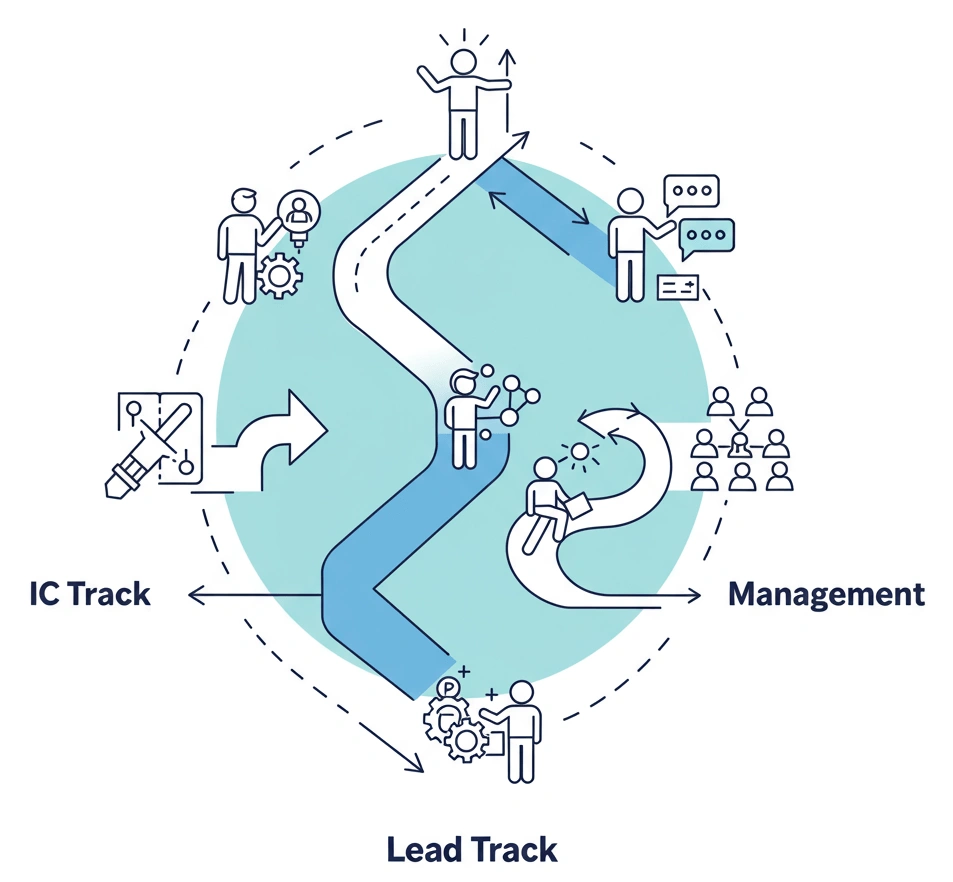
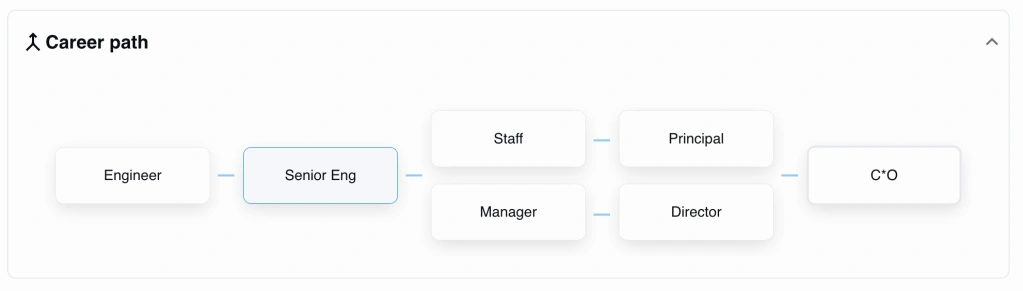
Good paths aren’t just vertical. Good career paths allow people to grow within their role, learn “new jobs” and expand their view on what’s possible for them.
Help your people find the intersection of what drives them and what the team needs.
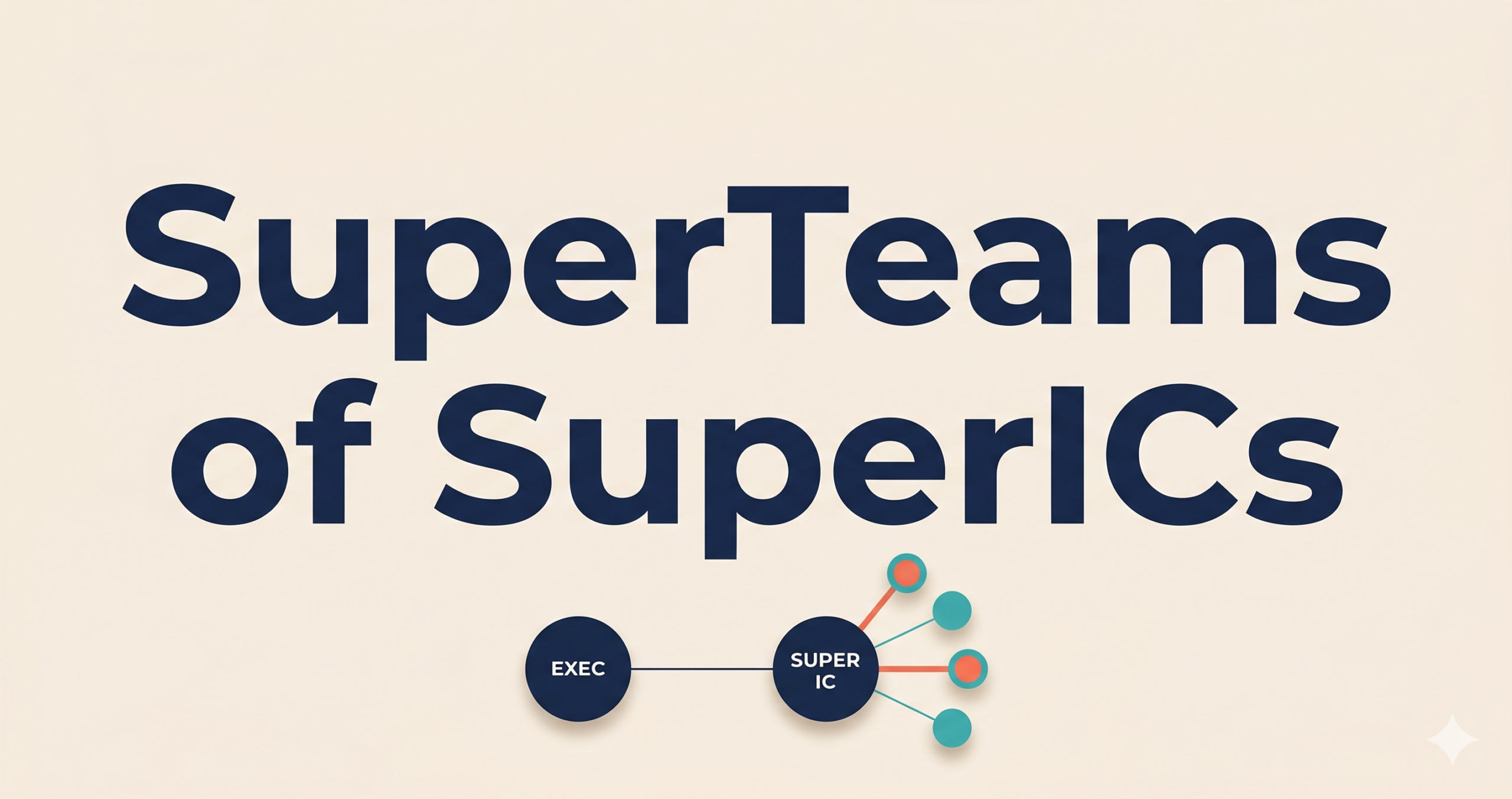
Always consider parallel tracks especially for technical roles:
- Awesome ICs who don’t want to manage people
- People who can lead people, but not at the cost of abandoning their craft
- Mentors vs Team Leads vs People Managers
💡 And remember:
The career paths you can offer may not fit everyone. Parting ways with a top performer whose goals no longer match what your company can offer is an act of love, not failure.
How Expectations Work: connect Vision to Values to Skills
I usually consider 3 major areas of expectation:
- Vision and its children: the “what we bring to the world”
- Mission and its children: the “who we are”
- Function and its children: the “skills we need”
You may have seen “mission and vision” on the same chart (MOST/VMOST acronyms): I am not sure that’s the right approach. They have a very strong relationship, they need to work together, but I disagree to any representation that shows a parent/child relationship between the two. You’ve probably seen companies with similar mission and completely different visions, and vice-versa.
Let’s break it down.
1. Team Objectives (the day-to-day of Vision)
Understand how you contribute to the company you’re in.
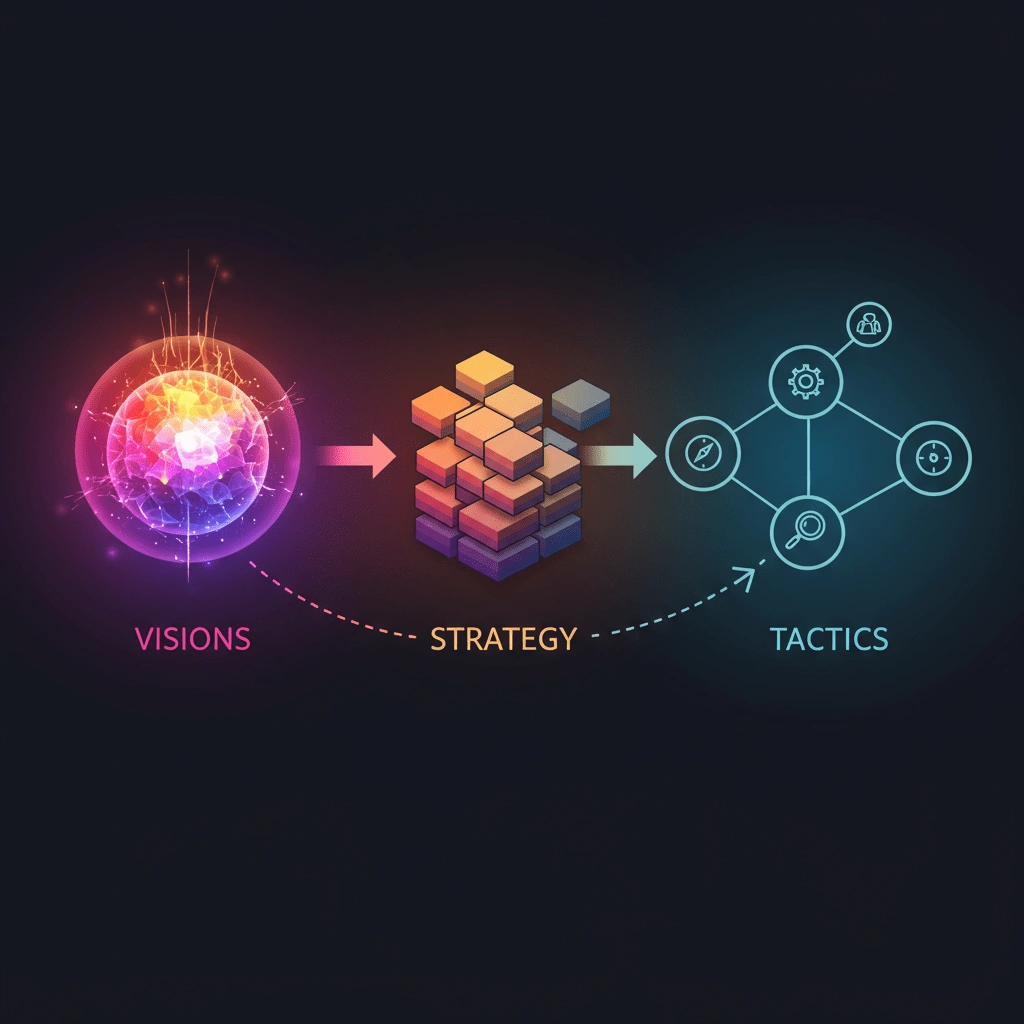
- Vision → Strategy → Tactics
- The “why” is your vision: the different world you are creating
- The “what” is the strategy: the approach to achieve your vision.
- The “how” are the tactics, measured by outcomes. They can be called OKRs, Objectives, Goals, Quarterly plans. It’s how you plan to execute the strategy and how do you measure you’re actually getting closer.
- The “team” focus
- Yes, you want and inspiring Vision and a strong Strategy
- Yes, you need tangible objectives and measurements
- But “what does it mean for me” is even more important: this is why objectives need to be cascaded to teams, or pods. Team/pod is the lowest level operative autonomous group of people working towards the same goal and closer to the data. OKR should cascade from teams of leaders to layers of teams: you may have a leader for the team, but I really don’t find any usage for OKR cascaded to individuals.
- The “GSD Factor”
- Getting “Stuff” Done is essential
- GSD should be visible and aligned to outcomes, not just output.
- Clarity on your company objectives and how do they cascade to your team ensures you’re aligned to what really matters.
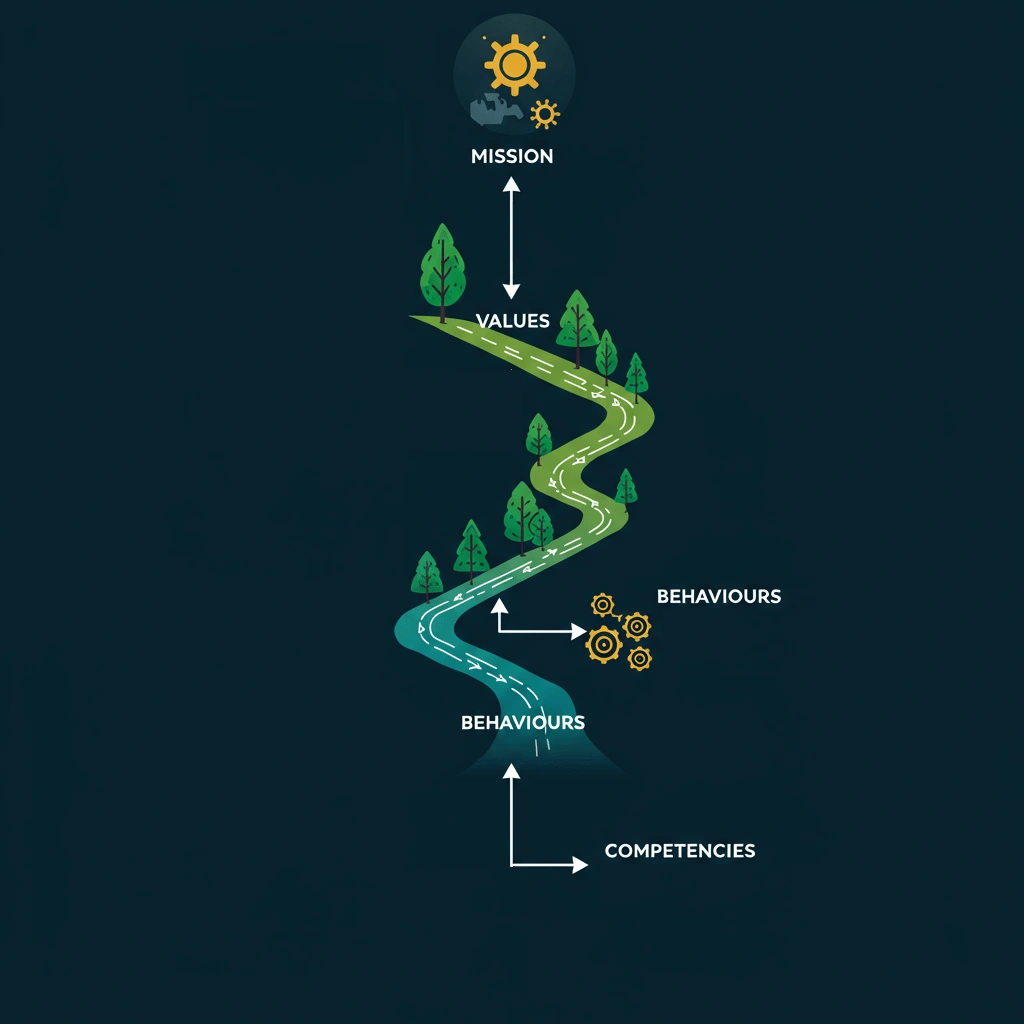
2. Competencies (the day-to-day of Mission)
Understand how you align to the company you’re in.
This is where Mission and Vision become two parallel pillars working together: a mission is why “the company” was created, while the vision is why “the product” was created.
Mission should drive your Values, but Values only matter if they translate to action. I am not a fan of one-word values, I find values without descriptions something too generic. Don’t tell me “integrity”, tell me what do you mean with integrity and how does it manifest in my day-to-day: define what are the behaviours.
- What does “collaboration” actually look like on your team?
- What does “ownership” mean at my level?
This is the genesis of your competency framework. It helps answer:
“What does great look like at this level, in this culture?”
3. Hard Skills: Still Important, but Not the Whole Picture
These are usually well understood (coding, data analysis, design principles, etc.).
But don’t let them be the only focus just because they’re easier to assess, or to improve.
Watch out for new roles requiring new skills you haven’t needed before. The step up often means doing less of what you mastered, and more of what stretches you.
Two Axes of Expectations: LEVEL vs ROLE
Career growth happens across two dimensions.
Level: The Growth Axis
Your level isn’t your job title. It reflects scope, autonomy, and influence.
- How do expectations change from a junior to a senior level?
- What does “senior” actually mean in your company?
This is where a competency matrix comes in. It defines what “great” looks like per level, independent of your role.
You usually expect all “Directors” (or VP, or Manager, etc) express values in a cohesive way across the company, independently of their role. You like to see behaviours, and you should define what is the “great” version of that behaviour in your company.
Role: The Craft Axis
Role expectations define what’s required in your specific job: PM, Designer, Engineer, etc.
This is where the skill matrix lives.
- What are the must-have skills?
- How are they rated per level and per role?
- What are the possible career paths in this function?
In terms of skills, a “Director of engineering” is very different from a “Director of marketing”.
Toolkit
Skill Matrix
- Define must-haves clearly and measurably
- Rate by role and level
Competency Matrix
- Express expectations through behaviors
- Rate by level, shared across roles
Path Creator
- Build templates for growth
- Support multiple tracks (IC, Lead, Manager)
- Use visuals, like a subway map, to show flexibility
How Branco Helps
Branco brings clarity to expectations, not just for employees, but for managers too. Here’s how:
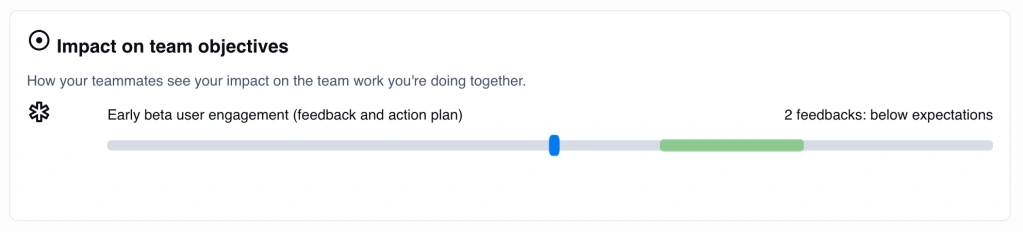
The GSD meter (Get “stuff” done)
- Easily review your impact on team objectives
- Show progress not only on skills and competencies, but also on how you’re moving the company forward, directly connected with your company goals
Codified Career Paths
- Easily document and share clear career progression options
- Allows parallel paths (for ICs, Leads, and Managers)
- Includes templates to get you started in minutes
Skill & Competency Matrices Built-In
- Create reusable skill frameworks by role and level
- Create reusable competency frameworks by level
- Define measurable, behavioural expectations and keep them consistent across the org
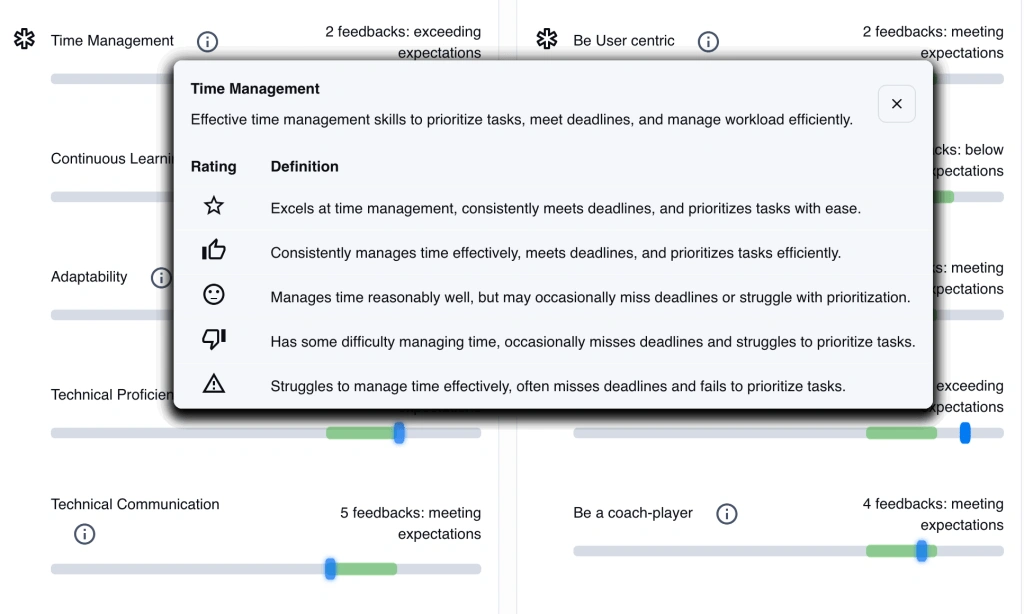
Feedback that Maps to Expectations
- All feedback in Branco is linked to specific competencies or skills
- This makes it easy to spot where someone is excelling, or needs support
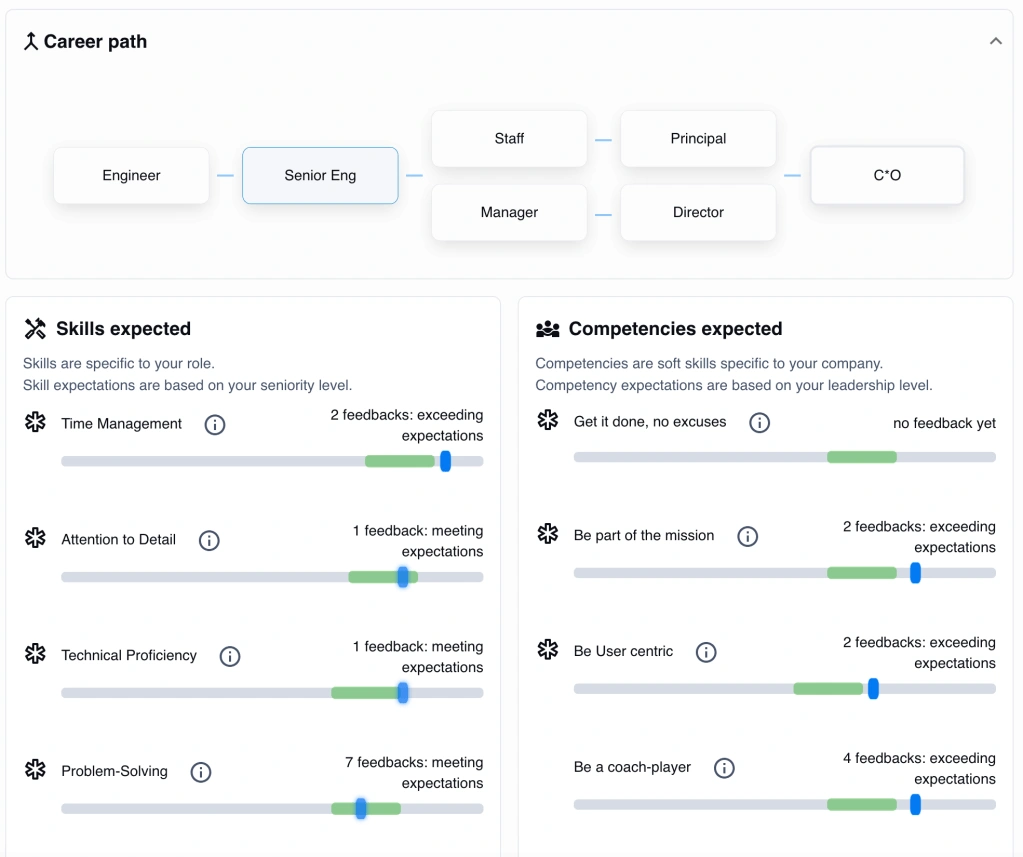
Visualize Progress Against the Role
- Branco surfaces how employees are tracking toward expectations, not just goals
- Helps guide growth conversations with data, not just intuition
- Navigate different roles and interact with the skill and competency matrix expectations
Final Thought
Growth doesn’t happen in the dark.
If you want people to level up, you have to show them the map.
And then you walk it with them, lead them.
Make expectations transparent, not tribal knowledge. Because if you don’t define “good,” everyone guesses, and guesses don’t scale.
Clarity builds confidence. Confidence drives performance. And performance fuels growth.
Next Up:
Episode 3 – The Alignment: Setting Objectives That Actually Work
We’ll talk about setting and cascading objectives, focusing on Outcome over Output