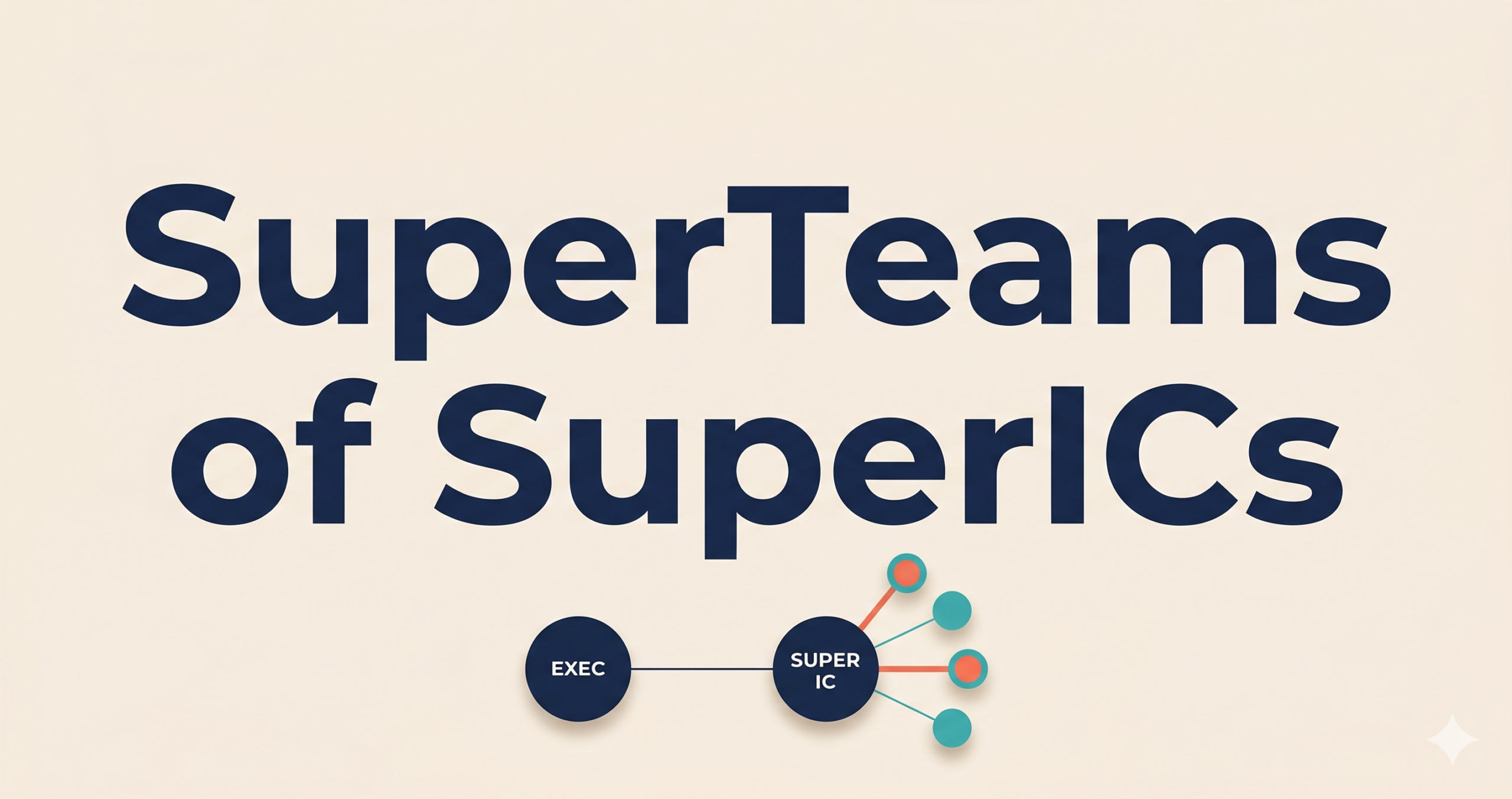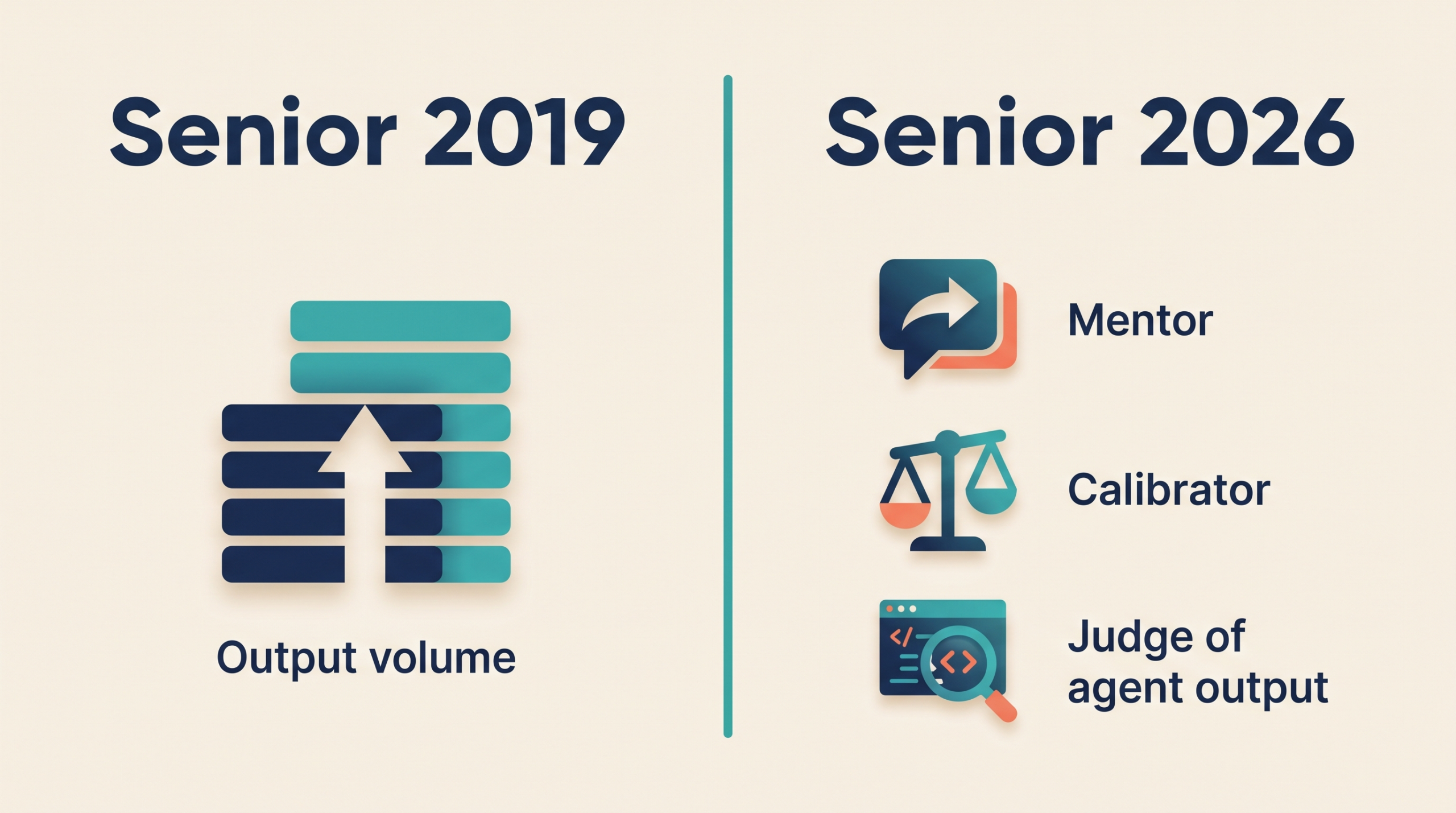
Growth still wins. The mechanism just doubled.
“Anytime the AI asks you to do something, you should, before responding, try your best to see if you could teach the AI to answer that question for itself.”
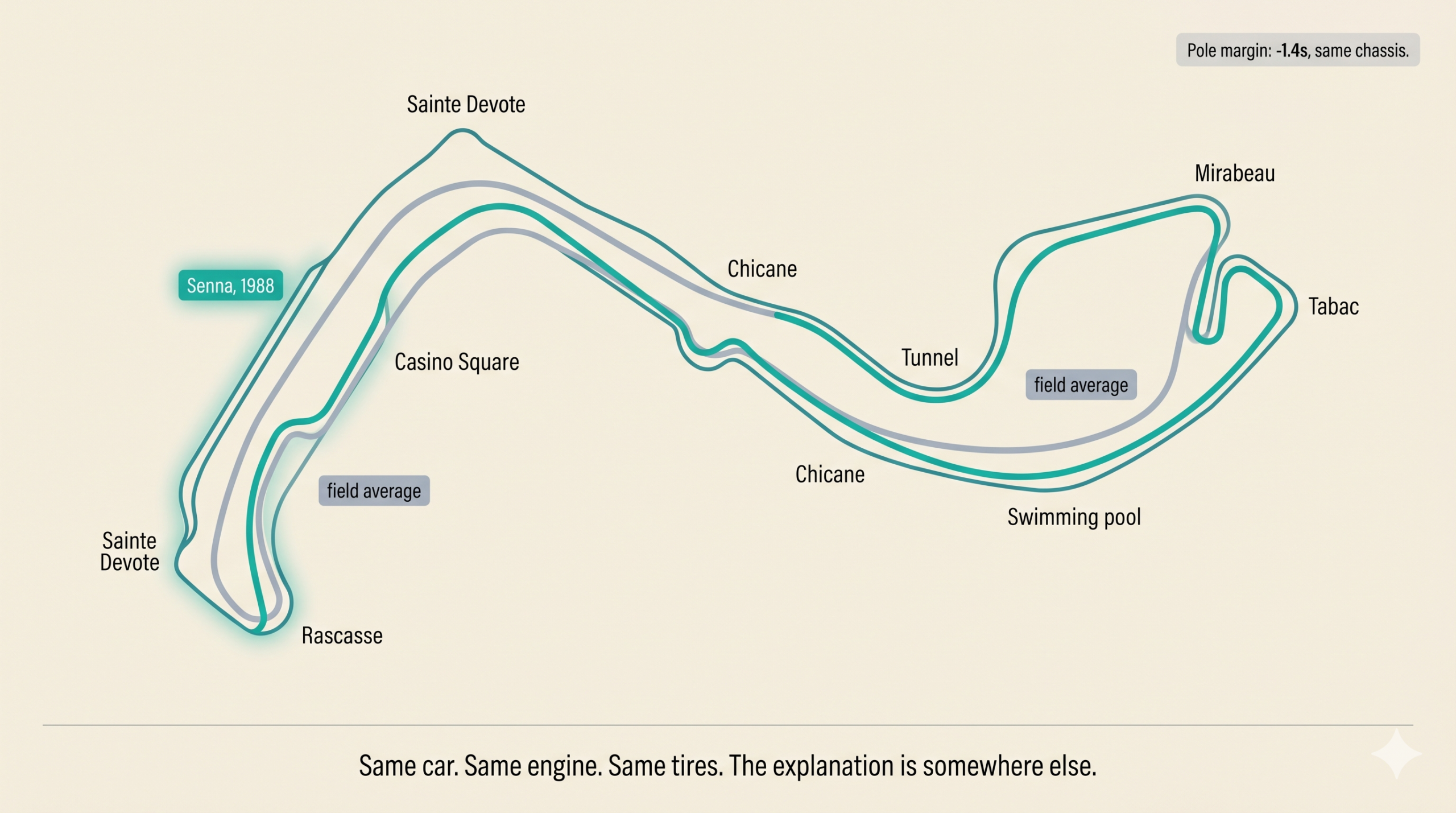
Monte Carlo, 1988. Ayrton Senna posts a qualifying lap 1.4 seconds faster than his teammate Alain Prost. Same car. Same engine. Same tires. On the telemetry overlay, his line is a ghost. You can see the difference. You cannot explain it.
Neither could Senna.
“Suddenly I realized I was no longer driving the car consciously. I was driving by a kind of instinct, only I was in a different dimension.”
You can teach how to drive a racing car. You cannot teach anyone how Senna drove that lap.
Every profession has this gap. The frameworks can be taught. The instincts and the creativity emerge in the doing, over years, and resist every attempt to write them down. The career advice industry has spent thirty years calling that gap “growth.” Take the course. Read the book. Get the credential. Then go and be good.
In 2026 the teachable layer can finally be modeled. Encode it into a Skill, a sub-agent, a rule file the team uses by default. The instinct layer is freed to do what only it can do.
Stop trying to grow the whole thing yourself. Clone the teachable layer. Keep growing the rest.
That is growth, squared.
Growth was always about transferable value
For thirty years the career framework has been the same. Identify the next role. Identify the skills it requires. Acquire those skills. Move up. The framework is so embedded that most ICs do not realize it is a framework. They just call it growth.
The framework was right about the goal. The goal was always to transfer your value to more contexts. A senior engineer in 1995 transferred value by hiring juniors, training them, and watching the team get faster. A senior marketer in 2005 transferred value by writing playbooks, presenting at internal kickoffs, and hoping the rest of the team would absorb the patterns.
The mechanism was slow. It had to be. The only way to copy what was in your head was a conversation, a meeting, or a document somebody had to read.
The mechanism is no longer slow.
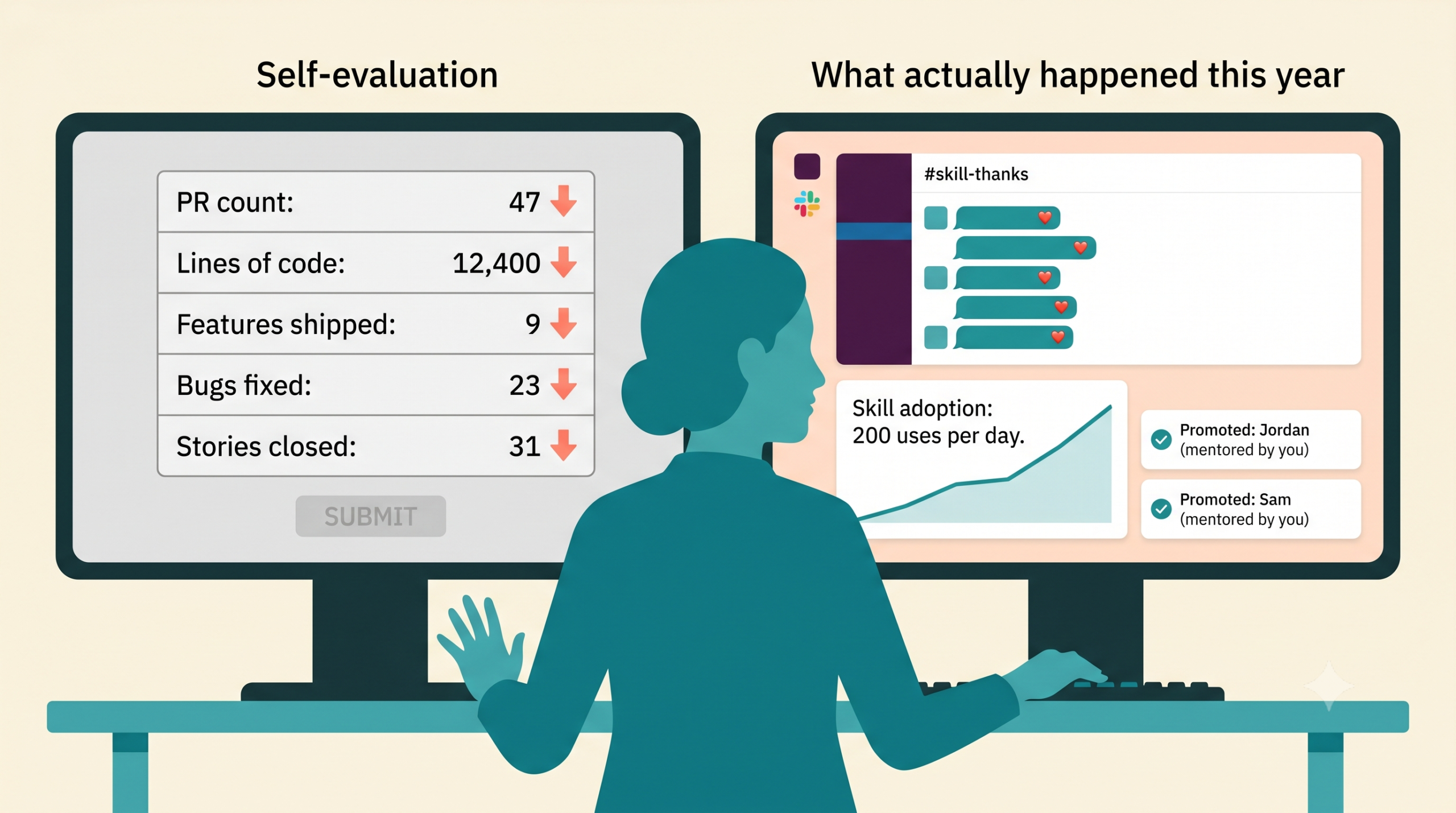
In 2026 the value you have built in your head can be encoded into a Claude Skill in an afternoon. A sub-agent that handles the recurring decision you were going to make anyway. A rule file that catches the bug you always catch. The Slack channel where teammates use the artifact you wrote has its own emoji.
The goal of the framework did not change. The mechanism doubled.
What clones, what doesn’t
The principle behind this dates to Michael Polanyi, writing in 1966. He gave it a sentence that sticks.
“We can know more than we can tell.”
The economist David Autor named the resulting puzzle Polanyi’s Paradox in a 2014 NBER paper. Some judgment can be articulated. Some cannot. The articulable judgment can be encoded into a process, a checklist, a Skill. The tacit judgment lives in the head and the hand of the person who has it and resists every attempt to write it down. That is the line. Cloning lives on one side. Mastery still lives on the other.

A Berkeley California Management Review essay in March 2026 updated the framework for the AI era (Tung and Roussiere, 2026). Modern Skills capture the explicit shell of judgment. The framework you use to evaluate a security flag. The prompt that surfaces architecture options. The rule file that catches the bug you always catch. They do not capture the rare call, the cross-functional negotiation, the moment of taste nobody else in the room would have made.
Both still matter. Cloning the explicit shell does not replace the tacit core. It frees the tacit core to do what only it can do.
Brian Lovin is a product designer at Notion. He was featured on Lenny Rachitsky’s How I AI in February 2026. The episode title was his own line. “I haven’t written a single line of front-end code in three months.” He built a Prototype Playground. The entire Notion design team now uses it to turn Figma designs into working code. He wrote a CLAUDE.md rule file. A stack of Skills. A slash command for deploys. An icon-finder Skill that stops Claude from hallucinating “search” instead of “magnifying glass.” His framing of the discipline is the cleanest statement of the post’s whole argument.
“Anytime the AI asks you to do something, you should, before responding, try your best to see if you could teach the AI to answer that question for itself.”
Recognize a question. Encode the answer. Never answer the same question twice.
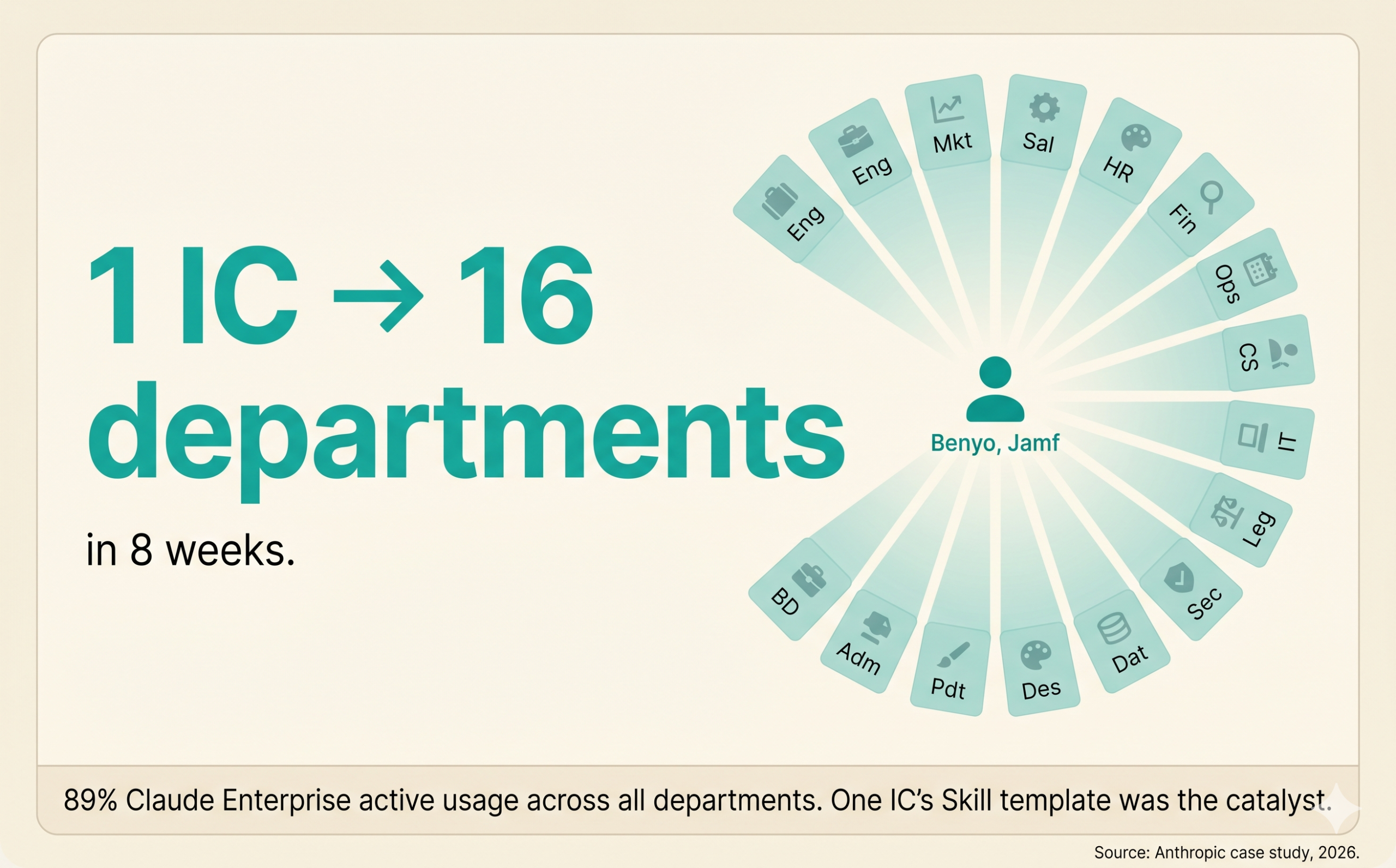
Nick Benyo is a software engineer on the Enterprise AI and Automation team at Jamf. He built a guided performance-review Skill that replaced a seven-facet spreadsheet with a forty-five minute interactive self-evaluation. Then he templated the same pattern onto vendor reviews and incident response. Jamf hit 89% Claude Enterprise active usage across all 16 departments in eight weeks (Anthropic, 2026). His template was the catalyst. Non-engineers across the org adopted his pattern to build Skills for data blending, dashboards, analysis. His own line:
“The barrier to building isn’t technical skill. It’s just knowing what you want and making sense of what you’re getting back.”
Two ICs. One engineering, one design. Different functions, same archetype.
There are more. Marie-Claire Dean shipped 63 design Skills in March 2026 with over 800 GitHub stars. The MKT1 newsletter cohort have been publishing marketing Skill libraries since the start of the year (Dean, 2026; MKT1, 2026). The pattern is not engineering-only.
A note on the honest counter. Autor himself revised in 2024. Large language models learn tacit patterns from examples. The encode-able line is not a fixed wall. It is a moving frontier. Skills capture the explicit shell of judgment today. Tomorrow they will capture more of the tacit core, because that is what learning from examples does. The IC who masters cloning early is the IC who rides the frontier as it moves.
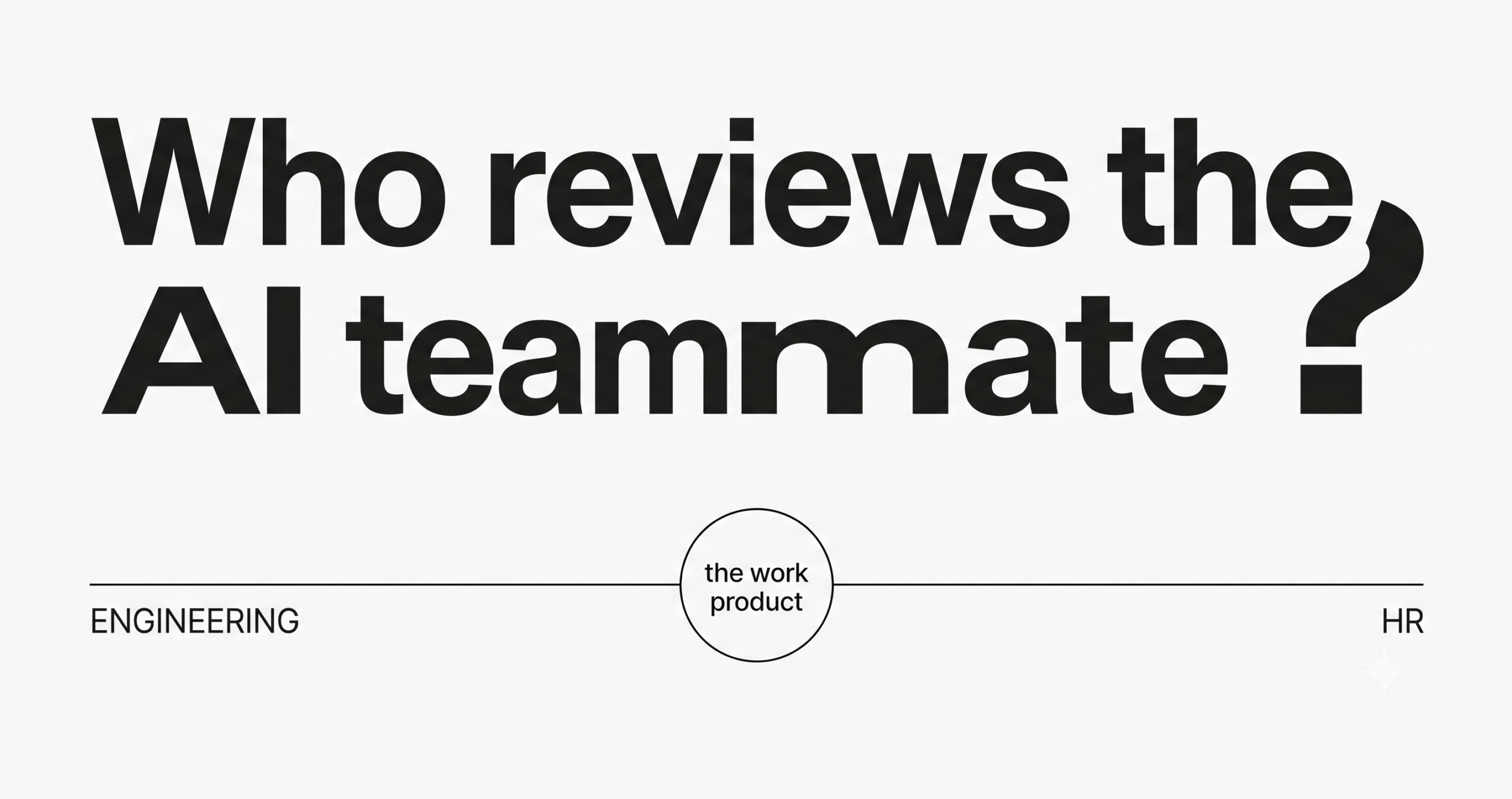
HR’s rubric needs a second column
Most HR career frameworks still index growth on the personal-expansion column. Courses taken. Certifications earned. Stretch assignments completed. Months on the team.
The 2025 Training Industry Report ran the numbers. US organizations spent $102.8 billion on corporate L&D last year, up about five percent year over year (Training Industry, 2025). Only thirteen percent went to learning tools and technologies. Eighty-seven percent still flows to traditional course-and-content delivery.
Meanwhile the seat time per employee has collapsed. From forty-seven hours per worker in 2024 to forty in 2025. The Association for Talent Development published a more dramatic version of the same trend. Formal learning hours dropped from 17.4 in 2023 to 13.7 in 2024, a twenty-one percent fall in a single year (ATD, 2025).
The capability has moved into the flow of work. The measurement has not.
What HR has to add is an “encoded practice” column on the competency rubric. A portfolio of Skills, sub-agents, rule files, and playbooks the IC has authored. An adoption metric that counts how many teammates use each artifact every week. A graduation framework for when a Skill is retired, replaced, or absorbed into the platform.
Spotify already runs this model on Backstage, their internal developer platform. They publicly measure adoption as the primary internal success signal. Their voluntary internal Backstage adoption rate runs at ninety-nine percent (Spotify, 2025). Helen Greul, Head of Engineering on the Backstage team, frames adoption itself as the score. The model works. HR has to adopt it.
The eng leadership world has already named the rule. A LeadDev essay last year called shared tooling the secret to getting to Staff-plus. The patterns the rest of the org now uses because you wrote them down. The multipliers you encoded. HR was the last function to write this rule down. The rule is already running in the orgs HR oversees.
How Branco helps
Branco is the operating layer for cloning growth. Two surfaces.
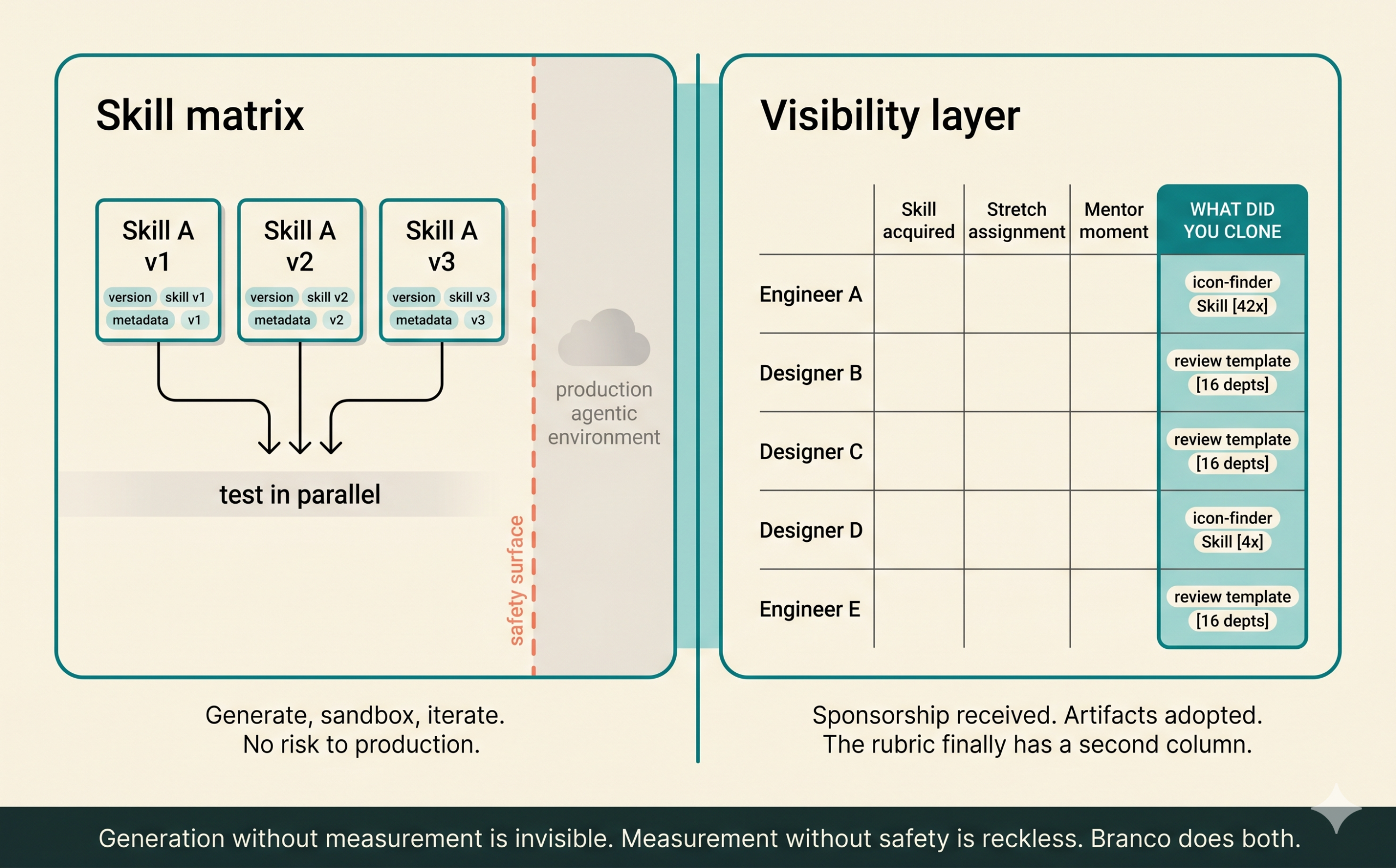
The Skill matrix. Agent-ready Skills generated from the IC’s practice. Versioned. Sandboxed. The IC and her team can run, swap, and test Skill combinations in parallel. Without risk of impacting the company-wide agentic environment. Ship a Skill to your team. Watch it work. Adopt it if it lands. Archive it if it does not. Without the safety surface, the IC who tried to clone once and broke production never tries again. With the safety surface, cloning becomes a normal practice. Iterative. Not heroic.
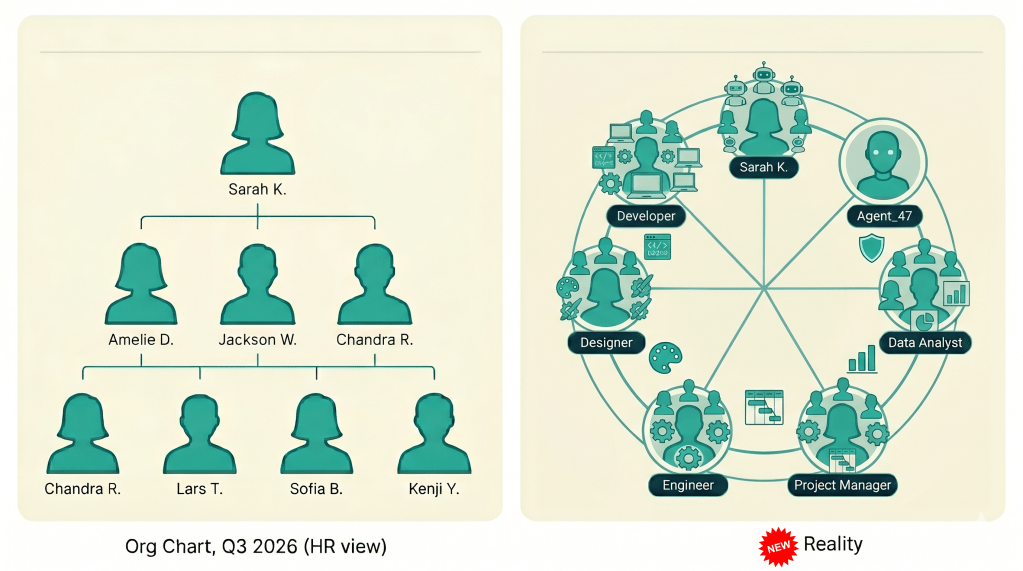
The visibility layer. Sponsorship received. Sharing artifacts adopted. Encoded practice running in N instances on the team’s clock. The competency rubric gets a “what did you clone” column. The IC’s portfolio doubles.
Generation without measurement is invisible. Measurement without safety is reckless. Branco does both.
Three moves
If you are a Head of People, add an “encoded practice” line to your competency rubric this quarter. Add “shared artifact adoption” to your calibration scorecard. Brief the managers in your next staff meeting.
If you are an engineering or product manager, ask each staff-plus IC one question. What did they teach the AI to answer this quarter. If the answer is nothing, that is the signal.
If you are an IC, pick one practice you do well. Encode it as a Skill. Sandbox it. Run it on your own work for a week. Then offer it to your team in parallel. They keep using their version. You offer yours. Watch which one wins. The Skill matrix lets you iterate without risking anyone else’s work. That is how cloning becomes a habit, not an act of courage.
Growth still wins. The mechanism just doubled. Personal expansion teaches you new things. Cloning teaches the team yours. Do both.
“What did you grow this quarter, and what did you clone?”
That is the new question. That is growth, squared.
If you want to see what cloning growth looks like in practice, request a demo of Branco.ai.
Related reading
- Stop asking for a promotion
- The H in HR Now Stands for Hybrid
- The Last Fast IC
- Beyond Skills: The Real Promotion Playbook
Sources and further reading
- David Autor (2014), Polanyi’s Paradox and the Shape of Employment Growth
- Teresa Tung & Philippe Roussiere (2026), Tacit Knowledge Is Your Next Competitive Moat
- Lenny’s Newsletter (2026), How Notion Designs with AI: Brian Lovin’s Prototype Playground
- Anthropic (2026), How Jamf Engineers Build with Claude
- Spotify (2025), Measuring Backstage Success at Spotify