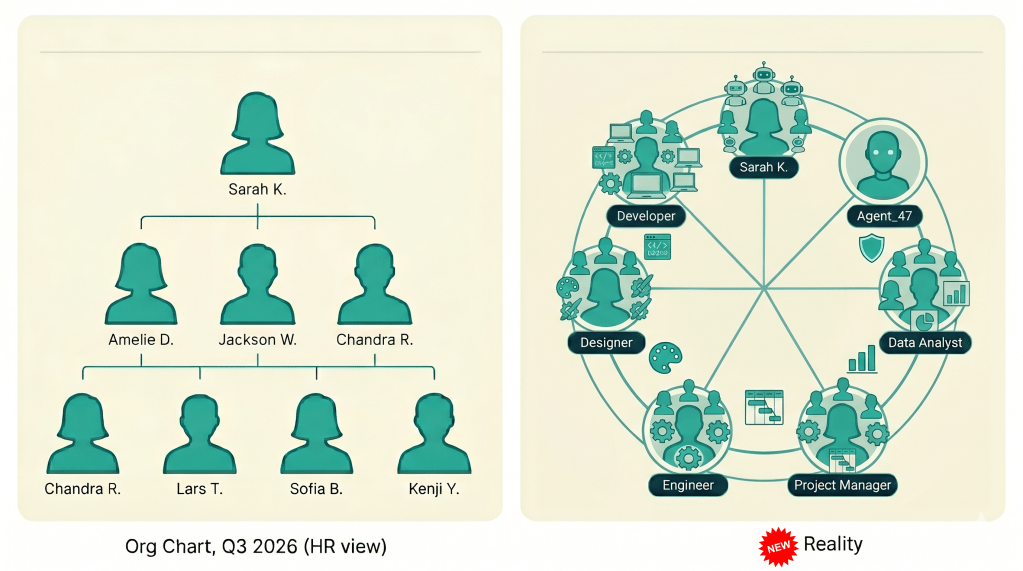

AI didn’t break the career ladder. It rewrote it.
“The path isn’t shorter or longer. It’s different and the fastest developer doesn’t cut it anymore.”

The companies cutting junior hiring are watching the wrong dashboard. They are looking at a headcount number. The number that matters is who in the room can teach.
For thirty years, “senior” went to the person who shipped the most. The fastest IC. The one who could do the work of three. That math just changed. AI took the manual layer of the job, and what is left is judgment. And teaching. And catching the rare-but-large mistake before it ships.
Senior is no longer a label for a fast IC. Senior is now a role. And most companies have not noticed.
The Junior Pipeline Is Not Closed. It Got Compressed.
Software developer employment for 22-25-year-olds is down nearly 20% since 2024 (Stanford HAI, AI Index 2026). The official narrative is that AI ate junior work. The real story is finer.
AI absorbed the boilerplate. The CRUD endpoints. The scripted tests. The bug fixes that used to be a junior’s first six months. Senior engineers do those tasks themselves now, with an agent, instead of handing them off. The junior pipeline did not disappear. It compressed.
This is a structural shift in where work enters the team. The junior tasks still exist. They are being done by seniors-plus-agents instead of juniors-plus-mentors. The same throughput, with a shrinking talent base.
If you are a Head of People, this is the dashboard you should watch. Not the AI productivity number. The mentorship-throughput number. The number of seniors who have actually onboarded a junior in the last six months. That is the leading indicator for your senior bench in 2030.
The Pattern Is Older Than Software
The looms displaced weavers. The factory displaced the artisan. The IDE displaced the punch card. Agents displace the boilerplate. In every cycle, the human who survives moves up the stack to driving.
McKinsey put it plainly in 2026: the engineer of 2026 spends less time writing foundational code and more time orchestrating a dynamic portfolio of AI agents and reusable components. The central question for technology leaders is no longer how to scale engineering capacity. It is how to allocate human talent where judgment still matters (McKinsey, 2026).
The senior just got their thinking time back. Thinking time is teaching time, when seniors choose to use it that way.
The cost of growing a real senior has not been this low in twenty years. The apprenticeship is more direct than it has been in a generation. The senior is sitting next to the junior, with three agents working in parallel, pointing out the things their training never named. That is what driving looks like.
Senior Is No Longer a Label. It Is a Role.
A senior who only ships, in 2026, is doing junior work with senior pay. The title used to be aspirational. Now it is descriptive, and the description has changed.
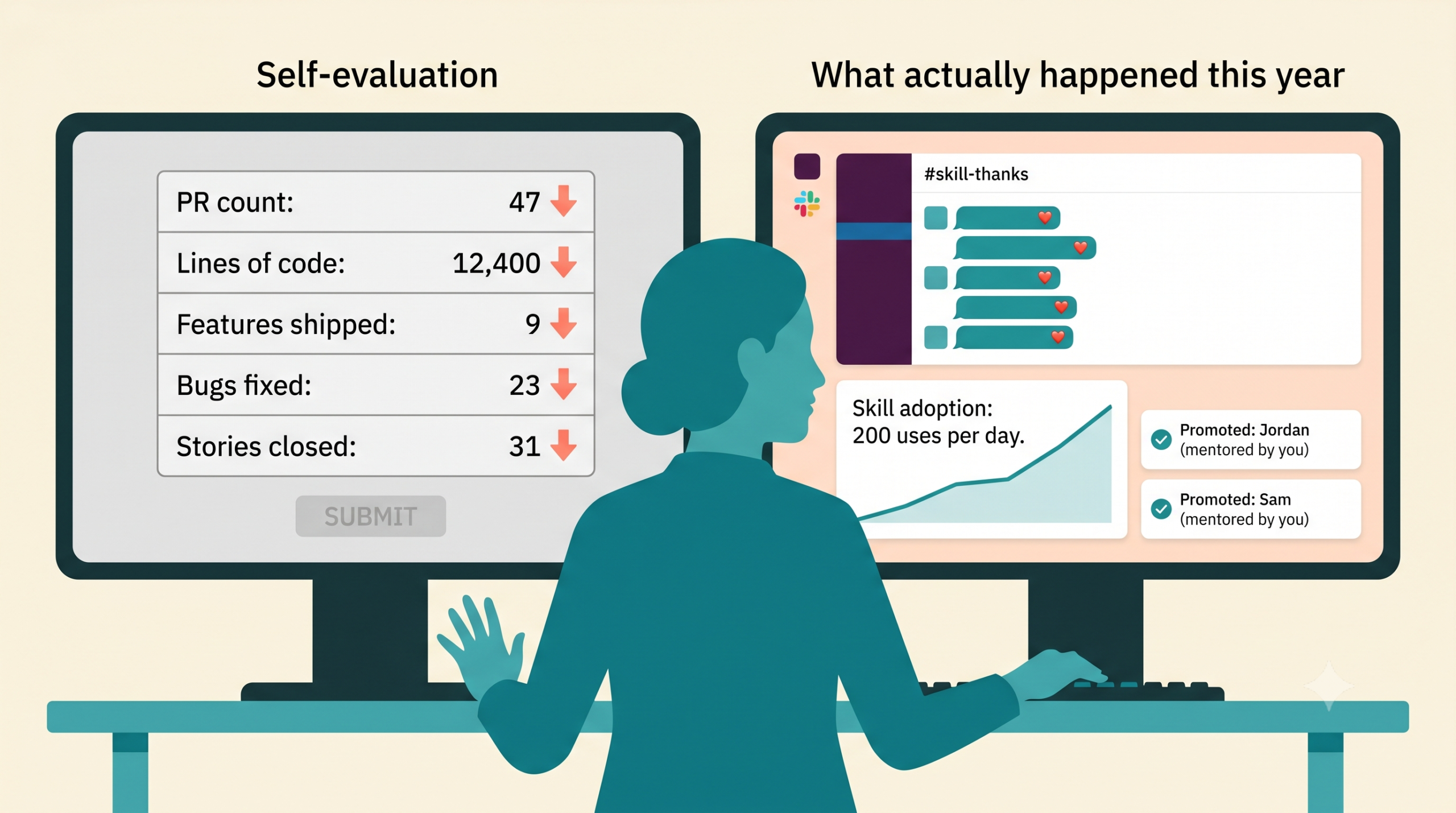
Senior means three things. Mentor. Calibrator. Judge of agent output. None of these are individual-output skills. They are team-multiplier skills. And the data has been waiting for someone to ask.
The Sun Microsystems mentoring program ran for 13 years and produced one of the cleanest data points in the literature. Mentors were promoted six times more often than their non-mentoring peers. Mentees were promoted five times more often. Retention for mentees ran 72% versus 49% for non-mentored employees. A salary grade change happened for 25% of mentees against 5% of their non-mentored colleagues (Sun Microsystems, Dickinson and Jankot, 2009).
That data is durable. Companies could afford to ignore it for thirty years. Not anymore.
“If you can’t mentor, you were never a senior. People are about to notice.”
What changed is the visibility of the gap. When manual work was the job, a fast IC could quietly dodge mentorship and still produce a great review. The output covered for the absent role. With agents covering output, the role is naked. The senior who never mentors is now the senior who never does anything that compounds.
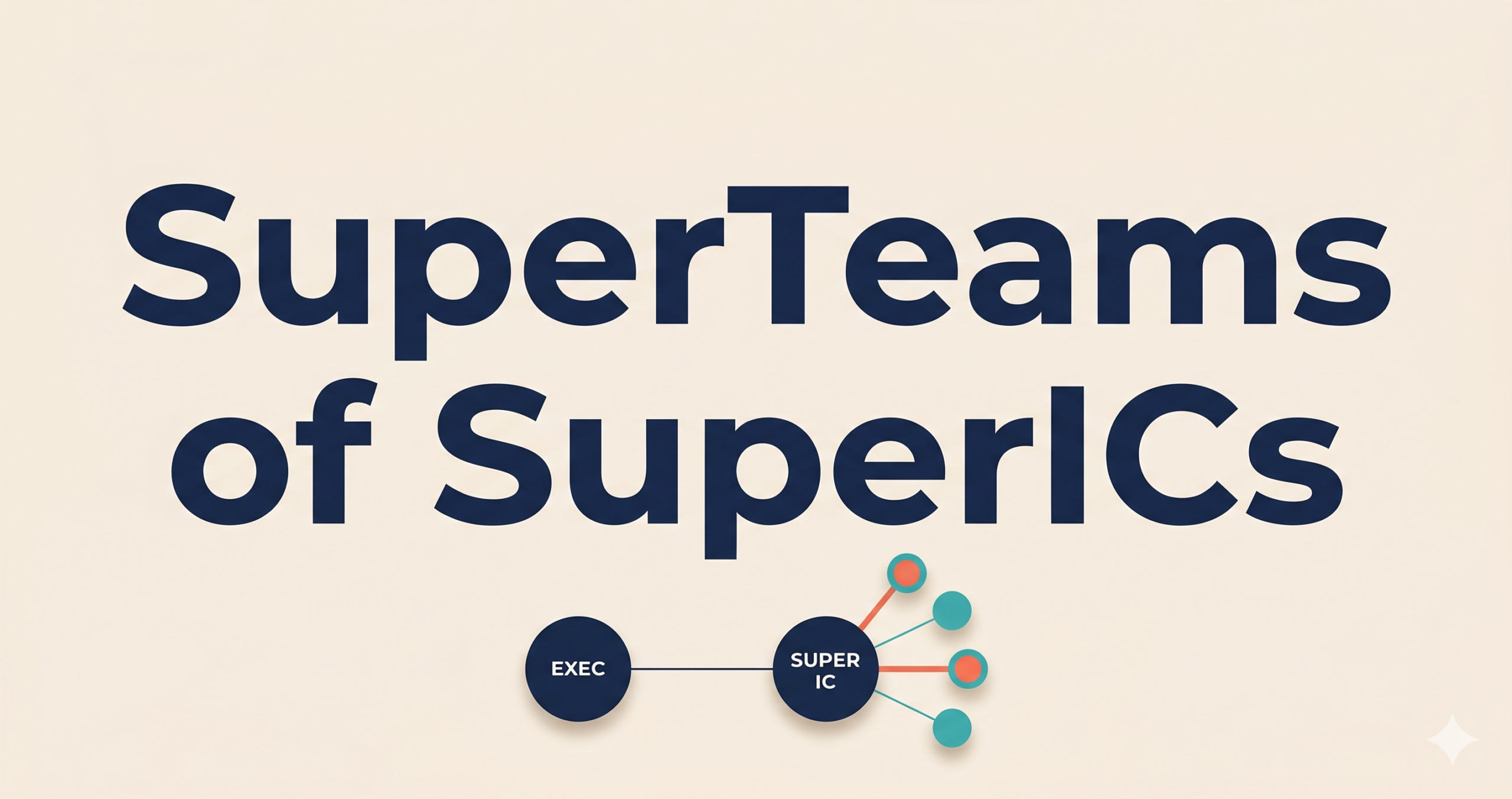
The 4-handed pattern is the new normal. One human, three agents. The human is doing senior work whether their title says so or not. Setting scope. Judging output. Calibrating risk. Catching the line of code that is going to take down a customer in production.

One Line of Agent Code Is Magnified
This is where the Tech Leader has been waiting for the article to land. They live the next paragraph daily.
Agents do not make junior mistakes. Junior mistakes are small, common, and recoverable. A typo. A missing null check. An off-by-one. Code review catches them.
Agents make rare, large, dangerous mistakes. Cloud Security Alliance and Apiiro analyzed 470 GitHub pull requests in early 2026 and found AI-written code carries a 2.74x higher flaw rate than human-written code. Incidents per pull request rose 23.5% year over year. Change failure rates rose roughly 30% (Apiiro and Cloud Security Alliance, 2026).

The new senior craft is catching that magnification before it ships. It is the daily reflex of “this looks right, but is it correct?” That reflex is not picked up from a course. It is picked up from sitting next to someone who has it, and watching them do it for six months.
This is what the apprenticeship is for, and why it is no longer optional.
Hybrid Teams Are Here
“I imagine coming to an interview and interviewing a designer and their agents, not only the person, and see if they can properly integrate.”

Hybrid teams used to mean remote and in-office. The next definition is humans and agents on the same team, doing different parts of the work, evaluated on how well they compose. We are two or three tools away from this being the default. The infrastructure is almost there.
The company that hires the designer with three good agents and a clean handoff pattern wins. Every time. They beat the company that hires the designer who insists on doing it all themselves.
Performance management has not caught up. Most review systems do not have a column for “how well does this person compose with their agents.” Most calibration meetings are still arguing about throughput from 2023. The tooling problem is solvable. The cultural problem is harder.
It starts with the manager. Gallup’s 2026 State of the Global Workplace reported manager engagement has dropped 9 points since 2022, with the steepest drop, 5 points, between 2024 and 2025. After structured manager training, manager performance improved 20-28% and team engagement rose up to 18% (Gallup, 2026). Managers are disengaged because the role expanded faster than the support did. They are now responsible for the human team, the agent team, and the integration between the two, often with no playbook.
A real senior, in 2026, is also a manager-track signal. Not because they have to be promoted to manager. Because they are doing the parts of management that scale: teaching, calibrating, integrating.
How Branco Helps
Branco is the operating system for hybrid teams. Continuous feedback and competency tracking for humans and their agents, on the same plane.
- Mentorship is visible work. The Live Promotion Package shows evidence of mentoring as it accumulates, not as an afterthought at calibration time.
- Feedback runs on cadence, automatically. Slack or Teams nudges peers and direct reports without anyone having to remember the calendar.
- Competencies match the new role. Mentor, calibrator, judge of agent output: each becomes a competency with behavioral markers, not a vague title bump.
- Feedback sits on top of memory. Agents on the team learn what their humans value, because the same feedback layer that grows the IC grows the agent.
- One signal, two species. The same continuous feedback covers the human, the agent pair, and the integration between them. No second tool.
- Building for hybrid teams. You need to understand what you miss, and what your agents should know too and learn at scale, how about both in one platform instead of 45 .MD files?
The hidden work of mentoring used to disappear into vibes. Branco surfaces it as the input it is.
What This Looks Like This Week
If you are a Head of People, retire the AI productivity dashboard for one quarter. Replace it with a mentorship-throughput count. Two questions, asked monthly: how many of your seniors taught a junior something specific in the last 30 days, and what was it. Anything else you measure right now is downstream of that.
If you are a VP of Engineering, walk your staff+ ladder this week. For each name, ask: what would it cost the company if this person left tomorrow. Then ask how much of that cost is the agents they orchestrate, and how much is the junior they grew. The names where the answer is “all agents, no junior” are the names you need to talk to.
If you are an IC who codes fast, mentor someone before your title catches up. Pick a junior. Pair on something. Write down what you taught. The promotion conversation will run on that evidence in 18 months, not on your throughput.
The fast IC is not dead. They just have to become a mentor too. Stop counting heads, start counting mentors and integrations.
The companies that come out ahead in 2030 are not the ones with the best AI. They are the ones who grew real seniors when everyone else was hiring agents. The path is not shorter. It is different. The bar went up. And don’t worry, there is an end to .md files.
If you want to see what mentor-track senior looks like in practice, sign up for free at Branco.ai.
Related reading
The High-Performance Team Myth
Only Fully Automated Continuous Feedback Is Continuous Feedback
Beyond Skills: The Real Promotion Playbook
Sources and further reading:
- Stanford HAI (2026), AI Index Report 2026
- McKinsey (2026), Designing an end-to-end technology workforce for the AI-first era
- Sun Microsystems Laboratories (Dickinson, K. and Jankot, T., 2009), Sun Mentoring: 1996-2009
- Cloud Security Alliance and Apiiro (2026), AI-Generated Code Vulnerability Surge
- Gallup (2026), State of the Global Workplace 2026