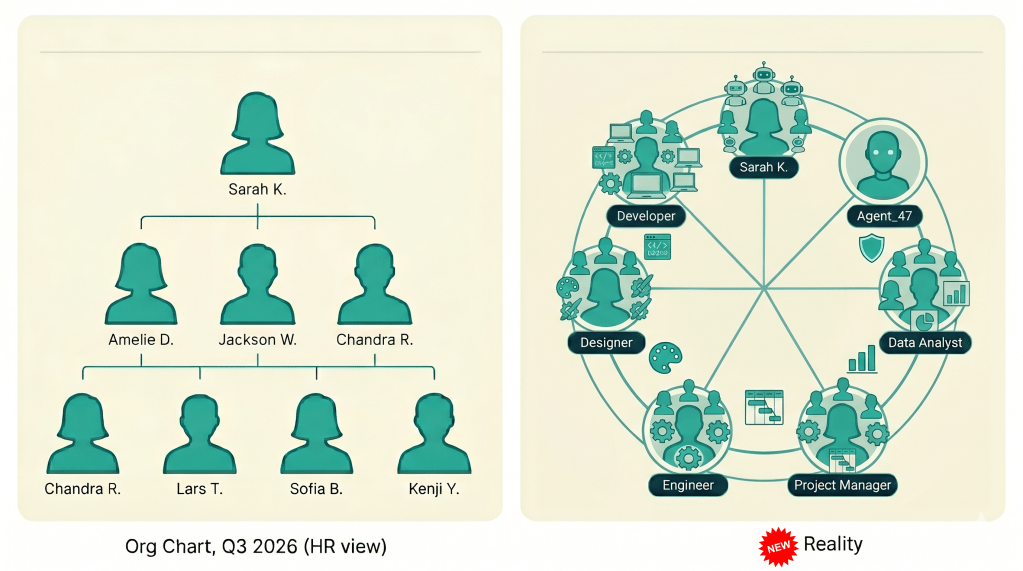

Output is cheap now. The differentiator moved. Here is what actually separates the teams that win.
“Culture decks don’t cause high performance. They describe what was already true.”
You cannot copy a high-performing team. You can only build one. And in an AI-compressed market, the difference matters more than it has in a decade.
For thirty years, “high-performing team” meant a team that produced more. More shipped features, more closed deals, more campaigns launched. Every management book had the same spine. That era ended last year. AI made output cheap, and with it, the definition.

Output Is Cheap Now
In 2025, 88% of organizations reported regular AI use in at least one business function, up from 78% a year earlier. Gen AI specifically climbed to 79% (McKinsey, State of AI 2025). The most common functions are the ones we used to measure: marketing, product development, service operations, software engineering. The output that used to separate a strong team from an average one is now a subscription.
And yet only about one in three of those same organizations have begun to scale their AI programs. The gap is not in access. The gap is in aim.
“AI made output cheap. Aim is what’s scarce now.”
The teams that win today are not the ones that ship the most. They are the ones that ship what the customer actually values. Companies that lead on customer experience grow sales 4 to 8% above their market average (Bain & Company, 2024). That is the new differentiator. Alignment and customer-value focus. Not volume.
If you are still building your performance system around output, you are optimizing for a variable the market already solved.
The Five Prerequisites
Google’s Project Aristotle studied more than 180 teams and produced one of the most cited findings in organizational research: the single strongest predictor of team effectiveness is psychological safety. Not talent. Not seniority. Not the mix of people on the team. Teams with high psychological safety show 19% higher productivity and 27% lower turnover (Google, Project Aristotle, 2016).
I want to extend that finding and give you a checklist you can run on a Tuesday.
High-performing teams emerge from five prerequisites being in place. Not four. Five. Most lists stop at four. The fifth is the one almost nobody writes about.
- Goals are clear. Can your most senior IC name the company’s top three priorities without opening a deck?
- Expectations are clear at every level. Can a senior engineer articulate what separates senior from staff without referencing the ladder document?
- Feedback flows without a form. Is feedback happening continuously, or is it bottled up for a review cycle?
- Trust is strong enough to fight productively. Can your team disagree in public without flinching?
- Politics is weeded, actively, starting at the top. Is the exec room fighting about the work, or fighting for position?
Miss one, the rituals collapse. Retreats, offsites, new OKR formats: none of them substitute for these five.
The manager sits at the center of prerequisites two, three, and four. That is not a coincidence. Gallup has found, across millions of work units over more than two decades, that managers account for about 70% of the variance in employee engagement (Gallup, State of the American Manager, 2015, reaffirmed 2025). The difference between your most-engaged team and your least-engaged team is mostly explained by who manages them. Not perks. Not pay. Managers.

The One Most Lists Miss: Politics
When lists of high-performing team traits leave out politics, it is not because politics does not matter. It is because politics is uncomfortable to name. So it sits in the footnote of every culture deck, phrased as “low ego” or “we assume positive intent.”
Politics is specific. It is the calibration meeting that reverse-engineers who gets promoted based on who sponsored whom. It is the bell curve defended by a spreadsheet that nobody can explain. It is the 360 form nobody reads because the feedback is already priced in. It is the rating discussion that resolves by seniority because nobody wants to have the real conversation.
These artifacts are not neutral. They are the mechanism by which politics survives in a grown-up organization.
And politics cascades. It does not emerge at the IC level. It starts in the exec room and falls downhill. When an executive team tolerates position-jockeying in its own meetings, every layer below learns the same grammar within a quarter. By the time it reaches a senior engineer who has been passed over for promotion three quarters running, politics looks like a law of nature.
It is not.
Here is the cost. Gallup estimates that voluntary turnover costs U.S. businesses more than $1 trillion a year. Replacing a manager or senior technical role runs from about 80% to 200% of salary (Gallup, 2024). And this is the part that matters most: 52% of voluntarily exiting employees say their manager or organization could have done something to keep them (Gallup, 2025).
“More than half of the people who quit say their manager could have stopped them.”
That is not a retention problem. That is a leadership-discipline problem. And it begins with how the exec room handles its own politics.

For an IC watching this play out two levels down, politics looks like a tax. You work twice as hard for the same recognition the politically fluent colleague gets automatically. Eventually, you pay the tax with your feet.
Weeding is not a one-time cleanup. It is a leadership habit. Every week, someone at the top is either surfacing the thing that needs to be said or letting it rot. High-performing teams emerge from the pattern of choosing the first one.
What This Looks Like In Practice
This is where most essays about culture stop. I want to be practical.
If you are a VP of Engineering, run the five-question check on your own team this week. Not as a survey. As a conversation. Ask two direct reports independently what “good” looks like at their level. If the answers diverge, your expectations are not clear.
If you are a Head of People, stop leading with the engagement survey as the diagnostic instrument. The engagement number is a lagging signal. The five prerequisites are the input. Lead with those.
If you are an IC, watch the exec room. The pattern there is the pattern everywhere twelve months from now.
How Branco Helps
Branco is built around the first three prerequisites. It does not replace them with a tool. It operationalizes them.
- Goals that interconnect. Strategy cascades into team and individual objectives. Everyone sees the line from what they do to what the company is trying to achieve.
- Expectations encoded as competencies. Each level has specific behavioral markers. Nobody has to guess what “staff” means on your team.
- Feedback that is automated because humans forget. Continuous peer feedback runs on its own cadence through Slack or Teams, not because a manager remembered.
- Async by default. No extra 30-minute meetings. The 1:1 becomes the review-and-decide moment, not the data-gathering moment.
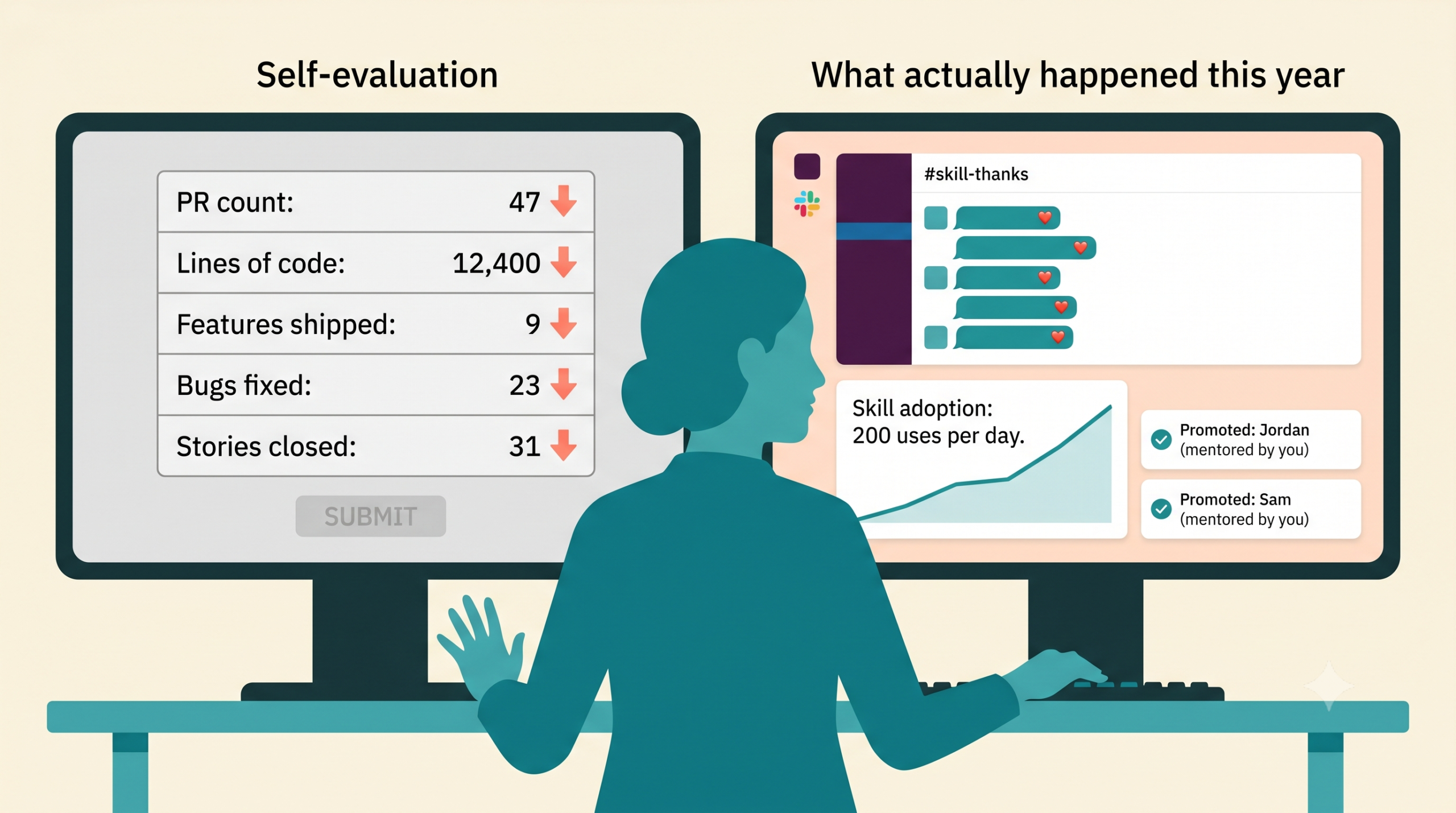
- Hidden work made visible. The Live Promotion Package shows evidence accumulating in real time. The calibration spreadsheet stops being the source of truth.
Branco will not remove politics for you. Nothing software-based can. But it makes hidden work visible, and politics hides in the dark spaces: the private rating, the promotion conversation without evidence, the calibration that runs on sponsorship. Light makes those spaces smaller.
The Quiet Truth
The famous culture decks do not cause high performance. They describe what was already true. Netflix did not become Netflix by writing the culture deck. The deck captured what they had already built.
In an AI-compressed market, the teams that win are the ones whose leaders built the five inputs on purpose. Not the rituals. The prerequisites.
Build the inputs. The outputs will describe themselves.
If you want to see what the five prerequisites look like in practice, sign up for free at Branco.ai.
Related reading
Only Fully Automated Continuous Feedback Is Continuous Feedback
Your Goals Don’t Talk to Each Other
Career Growth Toolkit 2: The Expectations
Career Growth Toolkit 3: Objectives That Actually Work
Sources and further reading:
- McKinsey (2025) – The State of AI: How organizations are rewiring to capture value
- Bain & Company (2024) – Consumer Products Report: Resetting the Growth Agenda
- Google (2016) – Project Aristotle via re:Work
- Gallup (2015, reaffirmed 2025) – State of the American Manager
- Gallup (2024) – This Fixable Problem Costs U.S. Businesses $1 Trillion